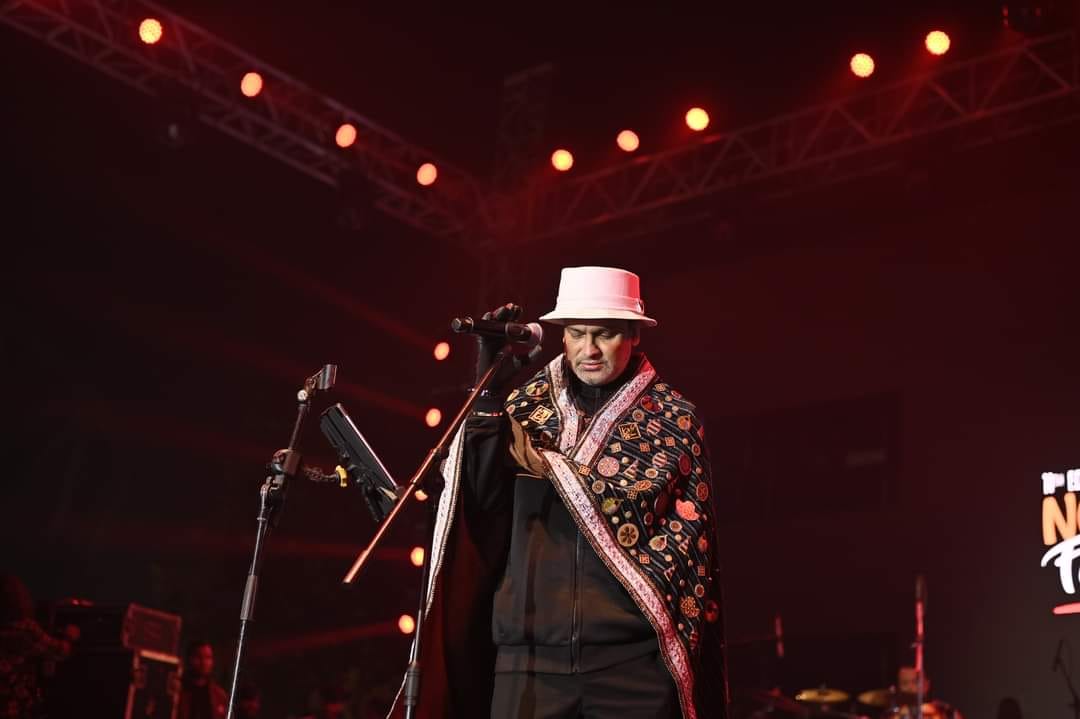
ZUBEEN GARG: A TRIBUTE
'He showed us that a singer is also a citizen and that the most powerful stage is sometimes the street,' writes PARVIN SULTANA
Zubeen Garg, an excellent singer, songwriter and an unignorable social presence in Assam and the wider Northeast passed away on 19, September 2025 in Singapore. The suddenness of his departure, during what was meant to be another concert, has left a silence too vast for words. Assam woke up to the news in disbelief and the collective grief that followed was not merely about losing an iconic musician, it was also about losing a heartbeat, a voice that for decades had echoed through festivals, protests, relief camps and households.
Born Zubeen Borthakur in 1972, he began as a singer but grew into so much more. Over three decades, his life came to belong to the people as much as to himself. In Assam, he was not just an entertainer but a companion to ordinary lives. He was the one who sang our sorrows, who danced with us in Bihu fields and who stood up when we felt voiceless. When thousands lined the roads during his final journey home, it was not just to bid goodbye to a celebrity. It was to honour a man who had woven himself into the very fabric of social life.
Zubeen’s social commitments were as sincere as his songs. Through the Kalaguru Artiste Foundation and countless informal gestures, he became a first responder in times of need. During the floods that return to Assam year after year, he was there -- organising relief, singing for donations and urging people to give. In the darkest days of the COVID-19 crisis, when hospitals ran short of beds, he opened his own home as a care centre. He played charity football matches, collected clothes and medicines and reminded us that fame can be used not for distance but also for intimacy, to come closer to people when they need you most.
At the same time, Zubeen was a tireless cultural ambassador for the Northeast. He carried the sounds and colours of Assam wherever he went from stages during Bihu to international festivals. His songs moved between Assamese, Hindi, Bengali and other languages, but at their core they remained rooted in the soil he called home. For many, he was proof that you could be both proudly local and confidently cosmopolitan, that the music of the Brahmaputra could flow into the wider world without losing its essence.
Yet, Zubeen was not a man of easy comforts. He was outspoken, impulsive and sometimes brash. He stood on stages and said things others were afraid to. He lent his voice to the protests against the Citizenship (Amendment) Act and in doing so became not just a performer but a witness to the anxieties of his people. He had critics and his words often sparked controversy, but that was part of his power. He forced conversations to happen, he provoked us into feeling and thinking. His social magnetism lay in this unpredictability -- you could not ignore him, whether you agreed with him or not.
His life was littered with controversies: hoisting the flag in shorts, walking off a Bihu stage when asked to drop Hindi songs, criticising Brahmins and apologising later, questioning Krishna’s divinity and drawing bans from satras. Yet none of this dimmed his following.
The days following his passing revealed just how deeply he had entered the rhythm of Assamese life. Shops closed their shutters, streets filled with spontaneous processions and leaders across the political spectrum paid tribute. The state itself paused in mourning. In those gestures lay a truth long understood by his admirers -- Zubeen da was more than an artist. He was a public conscience, one that may have faltered and contradicted itself at times but one that never stopped speaking.
Behind his restless public persona was also a man of disarming warmth. He mentored younger musicians, offered friendship across divides and carried within him both generosity and mischief. Those who knew him up close remember a man as capable of laughter as of rage, someone who could make you feel seen. He was not flawless, but it was precisely his contradictions that made him human and therefore relatable to the millions who claimed him as their own.
Born Brahmin, he discarded his sacred thread in Class 12 and never looked back. That impulse to reject labels, to act freely defined him. He once said Assam would inherit all he owned, for he belonged to the people. Perhaps Zubeen’s greatest gift was emotional clarity. His songs could bring tears, inspire defiance or make people dance as though no sorrow existed. When he sang at protests, his voice turned into collective defiance. When he performed in relief concerts, his music became an act of healing. For a generation that grew up through instability and change, he was an emotional anchor, sometimes stormy, sometimes steady but always present.
It is true that his presence was not without conflict. His boldness could divide as much as it united. But in his passing, he has united the state in an unprecedented way. From Madrassa children paying tribute with bowed heads, to differently-abled children expressing sorrow -- people across caste, community and class have felt that loss. In his uncanny way, he called himself a socialist, social leftist. In a society steeped in capitalism and consumerism, even such statements means a lot. He looked upto Kalaguru Bishnuprasad Rabha and Che Guevera, underlining his urge to speak for the people, to stand by them. Even in his music, he was defiant. He refused to limit himself and breathed new life into the folk music of the state. He chose Assam instead of Bollywood and gave his life and music to the state.
And now, in his absence, Assam finds herself orphaned of a familiar voice. The tears on the streets, the songs replayed in homes and the silence that falls when his name is spoken, all speak of a loss that is both personal and collective. We did not just lose a musician but we lost a companion of our joys and griefs, a voice that dared to belong wholly to its people.
For Assam, Zubeen’s legacy will not be confined to music. It will live in the ways people gather around his songs, in the courage he gave to speak up and in the warmth he showed in times of despair. He showed us that a singer is also a citizen and that the most powerful stage is sometimes the street.
The river of his voice may have fallen silent, but its echoes will long flow through the valleys and fields of Assam. For those who sang with him, marched with him or were simply comforted by his songs, the grief is heavy. But so is the gratitude for a life that was enriched by his songs.
Zubeen Garg will be remembered not only as an artist but as a powerful presence -- fearless, flawed, generous and profoundly human. Assam has lost her voice for the time being, but in the silence, one truth resounds -- he belonged to us and we belonged to him. Today, as crowds sing his songs in grief, Assam remembers his contradictions, his apologies, his pride, his sudden tenderness. He once told fans mid-song: “I’ve danced with the storms for many a lifetime.” That line now feels like prophecy. His silence only proves how much sound one life can hold.
Parvin Sultana teaches in Pramathesh Barua College and writes on various socio-political issues.



.jpg)








 (1).jpg)


