THUMBPRINTNE SERIES -- CHILDHOOD TALES
Abhilasha Sarmah remembers how her family made Chennai their home
Now that I look back, my childhood feels synonymous with the city of Chennai. I was only six years old when we moved there from my hometown of Jorhat. My father had been transferred for work, but I was too young to understand what a transfer even meant. All I knew was that we were packing our bags to go somewhere. And so, there we were—deuta, ma, my five-month-old baby brother, and I—on an Airbus aircraft, flying off to Chennai in the summer of 1998.
Thanks to my father's good sense, we moved into a ground-floor house in Gill Nagar instead of an apartment. There was space to play in the front, a well in the backyard with a guava tree behind it, and coconut trees all around. It was simply perfect. My world was wherever my parents were, and I didn’t quite understand what had changed in my life. The house owner's family lived above us on the first floor—Dadaji, Paati, Uncle, Aunty, S Anna, and Sanju. Who knew I would end up growing up with them instead of my own relatives? Who knew they would leave such a deep impression on me?
Slowly, the newness of the place began to sink in. The language—Tamil—left us baffled, but I remember liking the sound of it. So Paati (grandmother) from upstairs would walk down the staircase next to our window, talking to her daughter-in-law in Tamil. Ma and I would press our ears to the walls to listen. We didn’t understand a word, but we were fascinated. The language had a certain flow to it, as if one word rolled in voluntarily after the other.
I also got to witness my mom having her own language adventure at the vegetable market. Neither buyer nor seller spoke the same language, but they managed to do good business. Ma would point to the vegetable she wanted, and the lady at the shop would indicate the price with her fingers—two fingers for 20 rupees, four meant 40 rupees, and so on. But Ma soon picked up vegetable and fruit names, and went about her shopping like a queen. I was left in awe, gaping at her as she bought one kilo of thakkali(tomatoes), one kilo of vendakkai (lady’s finger), two kilos of vengayam(onions), and last but not least, some curry patta(never learnt it's Tamil) and one tenga(coconut). Mission accomplished!
My own language struggles became apparent on the first day of school. In fact, it was only when I started going to school that it really sank in—we were going to live here now. Until then, it had felt like I was just watching someone else’s life in a movie.
I was in Class One, and I only spoke Assamese. During the Hindi period, when Uma Ma'am asked if I knew any English—no. Hindi? Nada. Tamil? Of course not. The poor woman was left wondering how she was going to teach me. Although I couldn’t understand every word she said, I could understand what she was trying to convey. And she was so considerate and sweet. It was all the teaching and care a six-year-old needed in a new school. I don’t remember when I learned Tamil, but I do remember that it soon stopped sounding strange to me.
The smell of filter coffee and curry leaves sputtering in coconut oil soon became my normal. Food at home was mostly Assamese, but Ma quickly got excited about South Indian cuisine. Every now and then, I’d find a questionable idli, chutney, and sambar in my lunchbox. Not to take away from her extraordinary culinary skills—she soon mastered most of everyday
South Indian cuisine, and it’s still a staple in our house today. Our house had a striking mask near the front gate. It had exaggerated facial expressions with large eyes, sharp teeth, and vibrant colours. Some people painted these faces on ash gourds and placed them on their gateposts—it was believed to ward off the evil eye.
All the aunties on our street wore their saris above the ankle, unlike my mother, whose sari always touched her toes. Their skin was often tinted yellow with haldi, hair oiled and combed flat, flower malas (malli pu) tucked into their hair, and vibhuti marked on their foreheads. The men wore vibhuti too, either from the puja room or temple, and dressed in veshtis (dhoti, not lungi) with a small border. Some would roll up the veshti halfway when riding their mopeds or bikes. Simple dressing, big smiles. We also got into the habit of visiting the nearby temple often. And once, in Triplicane, I had the best prasad ever—tamarind rice at the Parthasarathy temple.
Aunties dressed up in Kanjivaram silks and what looked like all of their gold to attend weddings. There was no fancy cutlery or plates heavier than hands could carry. People used nature's own plates - banana leaves. Everyone sat in rows to be served little portions of myriad dishes, one after the other: vegetables cooked with roasted dal and coconut, some kozhambu (curry), rice, sambar, rasam, curd rice—and my favorite, appalam(papad). Sometimes, there was payasam—a few strands of sevai and tapioca pearls floating in honey-colored, sweet, thickened milk. Simple and sumptuous.
Beach visits were taken for granted, with Marina Beach being the highlight. It took me quite a while to realise Jorhat didn't have beaches. We would visit Jorhat every year with bags full of gifts. And somewhere along the way, I didn’t even realize when Chennai became the home we returned to—after visiting relatives in Jorhat.
Sanju and S Anna (Anna is how you address an older brother) became my constants along with my baby brother. I didn’t have an older sibling, so I started looking up to Anna as an older brother. And Sanju, who was a year younger than me, became my companion. The three of us would play cricket in the evenings in the narrow, four-foot-wide space between our house and the boundary walls. With them, I learned to climb walls and keep wicket behind the stump—our guava tree.
As soon as the clock struck six, Dadaji from upstairs would leave for his evening walk and send us kids indoors, saying it was time to end playtime for the day. Here, I need to intercept and clarify: the word for grandfather in Tamil is actually Thatha. But S Anna and Sanju called him Dadaji, and so did I, in my little head.
Paati, on the other hand, completely befuddled me. She made the best food. Every morning, she would wake up early, open our gate, and sweep the concreted area in front. Then, she would draw the most beautiful kolams every day. Can you imagine the delight of a child seeing such intricate patterns on her way to school? Paati would often walk to the backyard to check the water level in the sump. In the eight years that we lived there, we never heard her even sneeze once. She wasn’t very expressive, so I didn’t quite understand her then. But now that I'm more grown up, I know her better. She was a strong woman—there was something iron-like in her that I crazily admire now. Dadaji and Paathi were all the grandparent figures I had growing up.
Then there was Uncle and Aunty, both always smiling so sweetly. We saw very little of Uncle’s handsome face—just as you rarely see an office-goer's. But Aunty would come by with carrot and bean idlis, and even cashew-raisin idlis. This was my little world at home.
But school was where I found my wings. Respecting my teachers was never a task—they were such wonderful people that respect came naturally. From Class 1 to 8, I couldn’t have asked for better influences than them. At school, I studied, I danced, I drew, I sang, I played. I lived fully. My parents had also enrolled me in art class. I learned the violin (a little reluctantly), and I even took abacus classes. I was living the dream.
There’s a funny incident about my violin teacher. My mother had decided I should learn the violin, so a teacher—Violin Sir—would come home to teach me. But in the blazing heat of Chennai, he would soon doze off as soon as he sat down. We’d barely reach Pa Dha Ni Sa and he’d already be asleep. I wasn’t very interested in the violin to begin with, and you can imagine the plight of a 12-year-old sitting quietly, waiting for her teacher to wake up and give her the next set of notes to play. Eventually, I ended up joining a school friend’s music class instead—and finally began to enjoy music.
If it hasn’t become obvious yet—yes, this is a love letter. I am in love with the place and the people. So this year, in March 2025, I got a chance to go back to Chennai after 18 years. On the surface, a lot seems to have changed. Pani puri has become much more common, for one. But I was relieved to find that people still prefer pongal for breakfast. It all came back to me in one whiff of air—filter coffee, malli pu, and sambar masala. The people are still the same: pure at heart, simple in their being, and deeply rooted.
I’m very grateful that Chennai became a part of my foundation. Now, when I look back as an adult, I often try to decode what exactly appealed so much to me. Maybe it was their integrity. There was a certain ease I grew up with—knowing that what was spoken was exactly what was meant.I remember one instance in school when a friend came up to me and said, “I feel jealous of you.” And do you know how that made me feel? Free. She was simply comfortable admitting that. There was no ill intention, no fear, no bullying. That matter-of-factness came as such a relief to me. It’s something I deeply missed after we moved out of Chennai.
The people seem to carry a quiet pride—one that comes from knowing exactly who you are. I admire the steadfastness of the people—their devotion, discipline, and respect for education. Classical dance and music are held in equal reverence. We would often spend our evenings downstairs, listening to S Anna and Sanju play the flute or the mridangam. That’s how I got into the violin. We would all play together for the school function, and I remember the rehearsals very fondly.
Another thing I remember distinctly is how safe I felt growing up there. There was an unspoken social code—an invisible but understood protocol between men and women that maintained a respectful distance. Yes, in some ways, the society felt conservative. Our school skirts fell at least two inches below the knee. We sat with our legs crossed and properly covered, braided our hair in two plaits, and always wore a bindi. Older girls would drape their dupatta ‘properly' over their uniforms—unlike the image Bollywood often paints.
I know this might not sound ideal to Gen Z, but there was an unexpected gift in all of this. Because external appearances were so downplayed, I was gently guided to look inward. I learned to find my value not in how I looked or what I wore, but in who I was. I learned to respect myself as a girl, not just because I was taught to, but because the culture quietly upheld it. I learned to honour myself. If anyone wanted to get close to me, they had to earn it.
I find some qualities strikingly common between people of the Northeast and South India. There’s a shared simplicity, honesty, humility, and a kind of purity that shows through the eyes—straight to the soul. I feel deeply grateful to have been shaped, at such a young age, by two cultures rooted in inner strength. I was nurtured by people who, to me, are much like rain—described so elegantly in Kural 12 from the Tirukkural, a revered Tamil classic by Thiruvalluvar. Rain, it says, not only nourishes the crops that nourish life, but is nourishment in itself.
The verse goes:
பா பாய பாகி பா
பாய உ மழை .
Transliteration:
Tuppārkkut tuppāya tuppākkit tuppārkkut
Tuppāya tūum maḻai.
English Translation:
Rain produces good food, and is itself food.
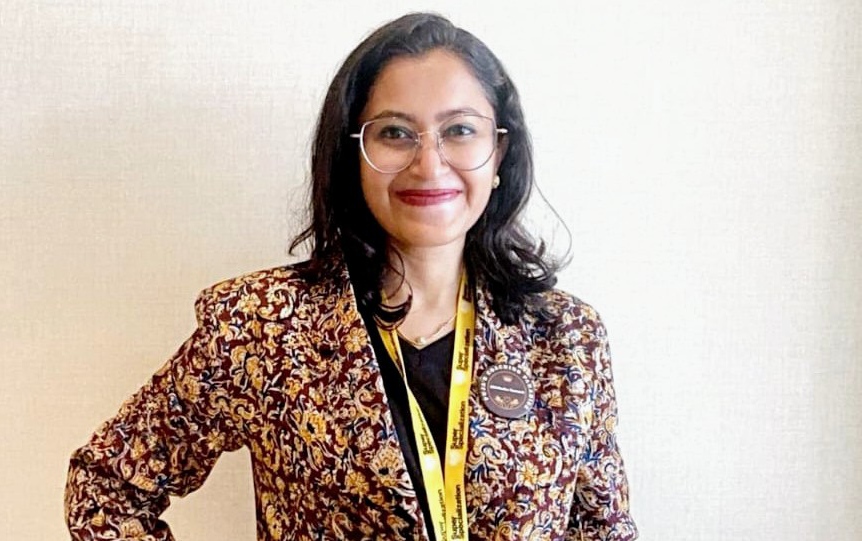
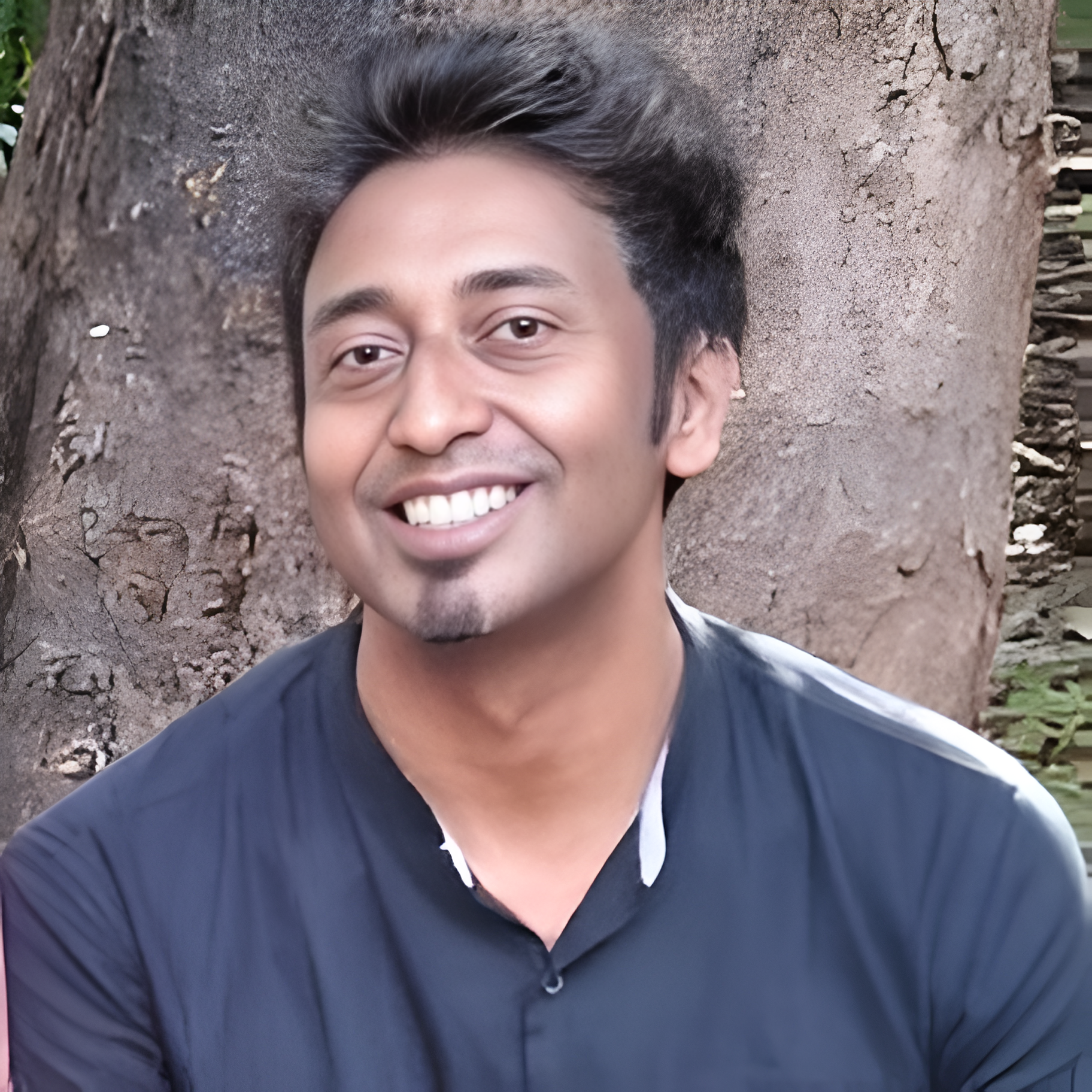
Abhilasha Sarmah is a Certified Life Coach based in Guwahati, who supports individuals through personal transformation and self-discovery. With a background in education and the arts, she brings a compassionate, creative approach to her work, especially with those who’ve often felt they don’t fit in.



.jpg)






 (1).jpg)


