THUMBPRINTNE SERIES: CHILDHOOD TALES
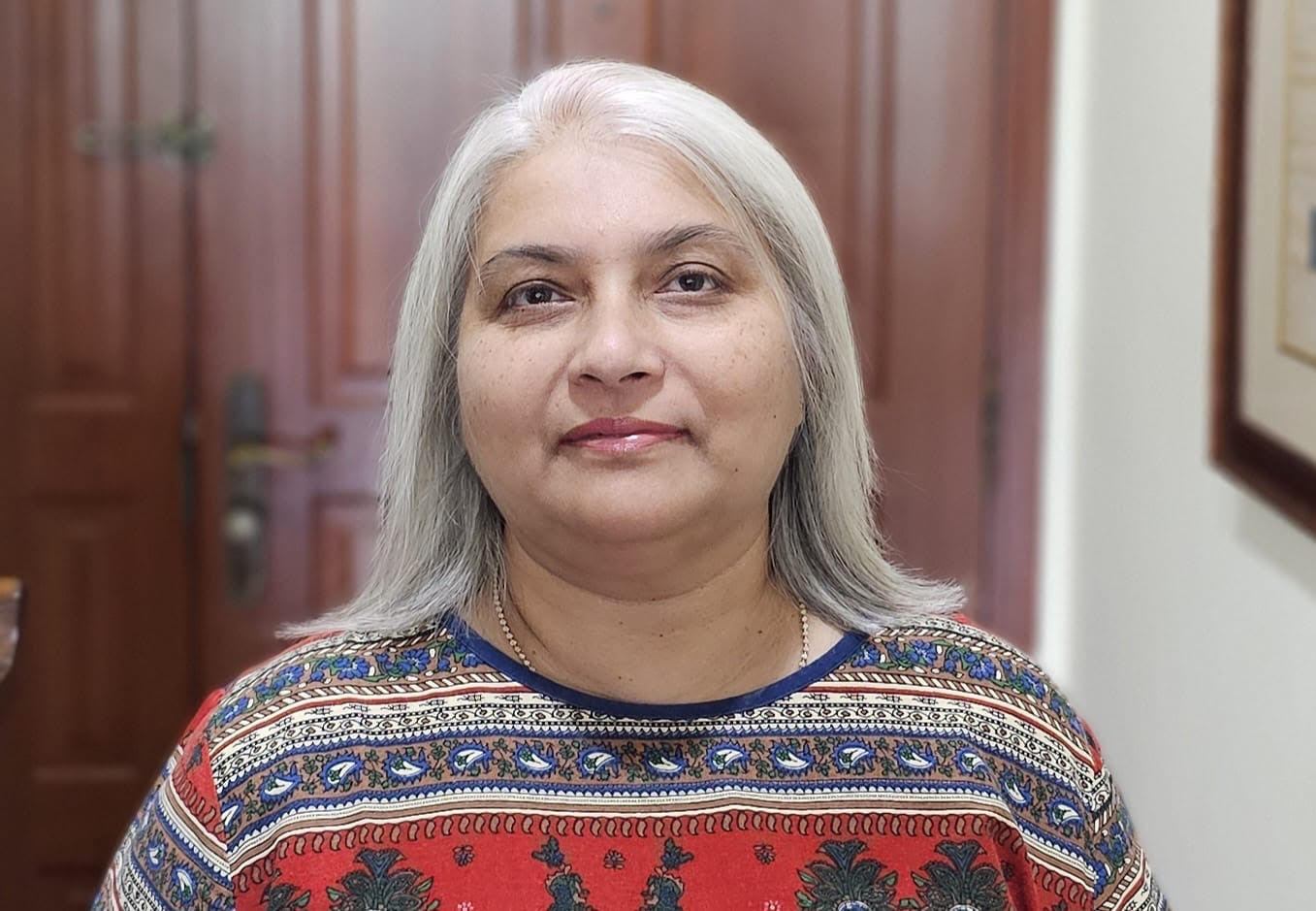
Mitali Chakravarty remembers how her parents trained stone quarry workers as paramedics
That was long ago -- when shady trees formed avenues in Lutyens Delhi, when traffic was lesser, when the Parliament House was a round building designed by Edward Lutyens and Henry Baker. That was a time when Rajpath connected India Gate to Rashtrapati Bhavan, and we sat in stalls to watch Beating the Retreat on 29th January. It was a time when my childhood congealed in Delhi.
We lived in South Delhi. Under the shaded Gulmohors, Amaltas and Neem, stood huge public spaces with grass -- parks in a way, where children gathered to play every evening. I was not great at sports and was normally treated with condescension by sportspeople. But I wrote. I wrote all the time, whenever I could -- even while lessons were on in class, and probably some of it reflected in my scores. I had high-minded parents who taught me scores, designations or awards do not matter as long as you can access your dreams. By then, I was studying in Delhi Public School, and my parents were living in Delhi.
My father was a doctor who worked with villagers. He was idealistic and helped formalise rural healthcare as a subject. My mother was a doctor too -- she was an anaesthetist and my father a gastroenterologist. They had left me with my grandparents to get their degrees from UK. But I was so young then, that I do not remember much of it.
My memories go back to when I was older -- school -- the first one was in Haridwar. My parents had returned from England and got a job in the Rama Krishna Mission Hospital there. We stayed on campus, and they found me a school. I don’t think I studied there very long. I would go in a rickshaw with many kids and the school had an open drain for bathroom. That is all I remember of it.
I was moved back to my grandparent’s home in Delhi where I joined the Sarada Mission Kindergarten. I remember spending the first day crying in the lap of the principal. I do recall going to my parents during vacations, riding in their Morris Minor convertible, standing up in the breeze when the hood was down and listening to my mother lilt -- like Kanika Bandopadhyay -- Rabindra sangeets. At times, it would be Western pop. She was a marvellous singer!
As I was a problem eater, during my holidays in Haridwar, my parents would make sandwiches and feed me while we watched movies in Chitra Talkies. I wonder if the hall still exists.
The other thing I do remember is playing badminton with the swamijis and my parents. I used to cycle in the huge compound. When I went back as an adult with my own kids, the campus of the Mission looked different. Maybe, spaces seem larger when you’re younger!
During this period, I recall vividly gathering fallen mangoes with my grandmother, who had accompanied me during one of my vacations, after a kal baisakhi storm. And there were the inevitable tadpoles I caught!
Nostalgia unfolds strange details. I recall the red leaves I tried to smell by stuffing them up my nostrils! I could not get them out -- nor could my folks. So, I was rushed to the hospital and the leaves were pulled out with some kind of pincers. I am not quite sure if that was a necessity or was my father being over cautious? For he would not let me get my ears pierced. Finally, when I was in the eighth grade, my dance guruji harangued him to get my ears pierced as I kept losing my clip-on earrings during dance performances! This was in Delhi and my father had already set up a rural hospital which is still functional and known better by his name than the official name. He took me to the hospital to get my ears pierced. His centre’s gynaecologist pierced my ears after giving me a Tetanus Toxoid injection and local anaesthesia!
Flipping back to my kindergarten days in Delhi when my parents were still in Haridwar, we had the Bangladesh War — when India helped Bangladesh win a war against Pakistan. It was a war that was based on linguistic hegemony I learnt in my adult life. I was only five then. That time, all I can remember is falling off the swing at school when the siren sounded. We had to be rushed indoors. At home, our windows were covered in brown paper. When the siren sounded at night, the lights were turned off and we took shelter under the huge dining table. Our car headlights were painted half- black.
So many memories of the past jostle to find voice. I remember the time when in my teens, Prime Minister Indira Gandhi was murdered. That time, we walked back from near AIIMS to our home -- nearly 4 km or more. Our buses dropped us and went off. Then too, my parents were overseas. My grandmother was visiting her daughter, and my grandfather had passed on.
My uncle (father’s younger brother) had also moved into our ancestral home with his family a few years earlier. They were my local guardians then. All schools and colleges had been closed due to the ensuing riots. And I was terrified when gunshots could be heard. At a point, we heard a mob. I was weeping with fear, but my brave young cousin promised me protection and said he would stand between me and the rioters. To this day, I am grateful for the love and affection I get from all my cousins. And being an only child, this is important.
What I find interesting in my past are the movements that passed by our lives. There was the Emergency when my aunt’s father faced incarceration -- I am not quite sure why he was imprisoned but it was unjust. He helped the marginalised and was active with my father’s hospital dreams too. I was impacted by my parents’ outlook and work. I remember teaching two workers, Ramrati and Horilal, the basics of Hindi and Maths. My parents were training these stone quarry workers as paramedics. My folks’ work took them to various places within India, to Africa and Latin America.
I travelled with them to a village in Assam once after my tenth-grade final exams. That was the first time I flew -- in a small Fokker Friendship from Calcutta to Guwahati. And then, we were driven to the village -- Rajapara. Some NGOs and villagers took us by car to the project. The first thing that happened was it turned dark almost as soon as we reached Rajapara. It was so dark that I started to cry. I had never seen such darkness in Delhi and had never experienced the sudden onset of night with a minimal period of dusk. But it happened.
The memories of Rajapara are so unique that they have stayed with me over the decades. I remember we had no electricity and a makeshift bathroom and shower! There was a beautiful pond where we picnicked. They caught a huge Chital fish for our dinner -- it was the best fish I had ever eaten in my life. The last day, I went riding on an elephant alone. They did not allow married women on the elephant and my father excused himself by saying he was too overweight for the elephant! I felt like a princess riding solo on an elephant back. I had heard stories of how my maternal grandfather went to school on an elephant howdah in an undivided Bengal. Now, his school lies in Bangladesh.
What struck me in Rajapara was -- it was women who made the calls. That was something that I found scattered through my childhood -- in festivals, real life and in the culture where my roots found succour to flourish. The other highlight of my past was the syncretic outlook of people -- we were taught in school a phrase called ‘unity in diversity’. My friends at home and in school belonged to different language and culture groups -- we embraced each other’s festivals and cultures. If we recited ‘Where the mind is without fear’ in the school assembly one day, the next day, we sang ‘Vaishnav jan to taine kahiye’. Our family embraced non-Bengalis as daughters-in-law. We learnt from diverse cultures. My parents often had visitors from Norway, Australia, Germany, UK and other countries. They were just like us, we discovered. We explored the commonality of our interests through games and interplay with their kids. I could as easily sit on the floor and eat with villagers as I could dine at a formal embassy party. It taught me that different worlds exist but under the same skies. They are interdependent and each is equally important. It was an open world — a world which united under one borderless sky.
Mitali Chakravarty rests on a wafting cloud where the https://borderlessjournal.com/ rests. She has scattered her ideas online and in her books



.jpg)






 (1).jpg)


