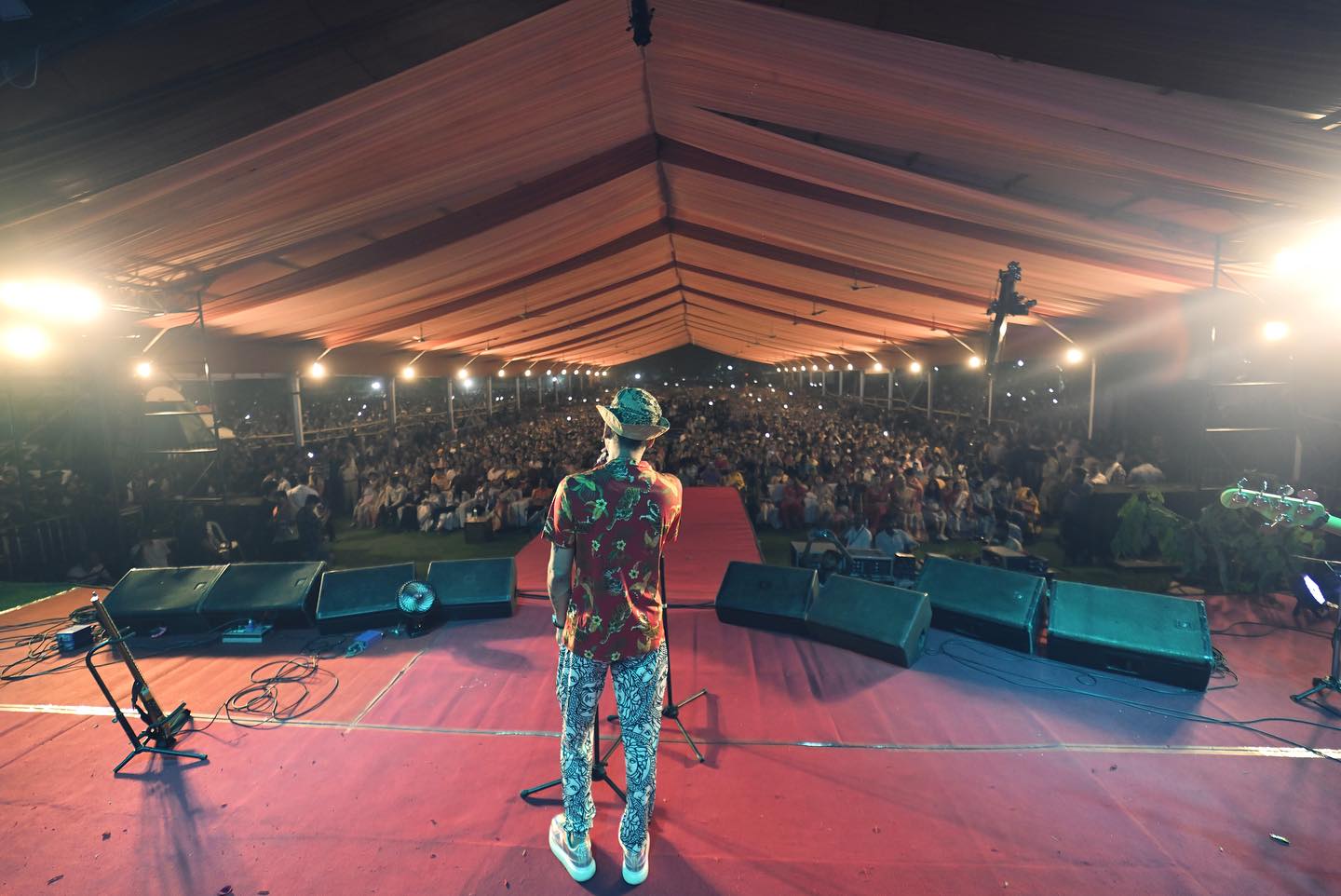
ZUBEEN GARG: A TRIBUTE
BY RASHMI BARUAH
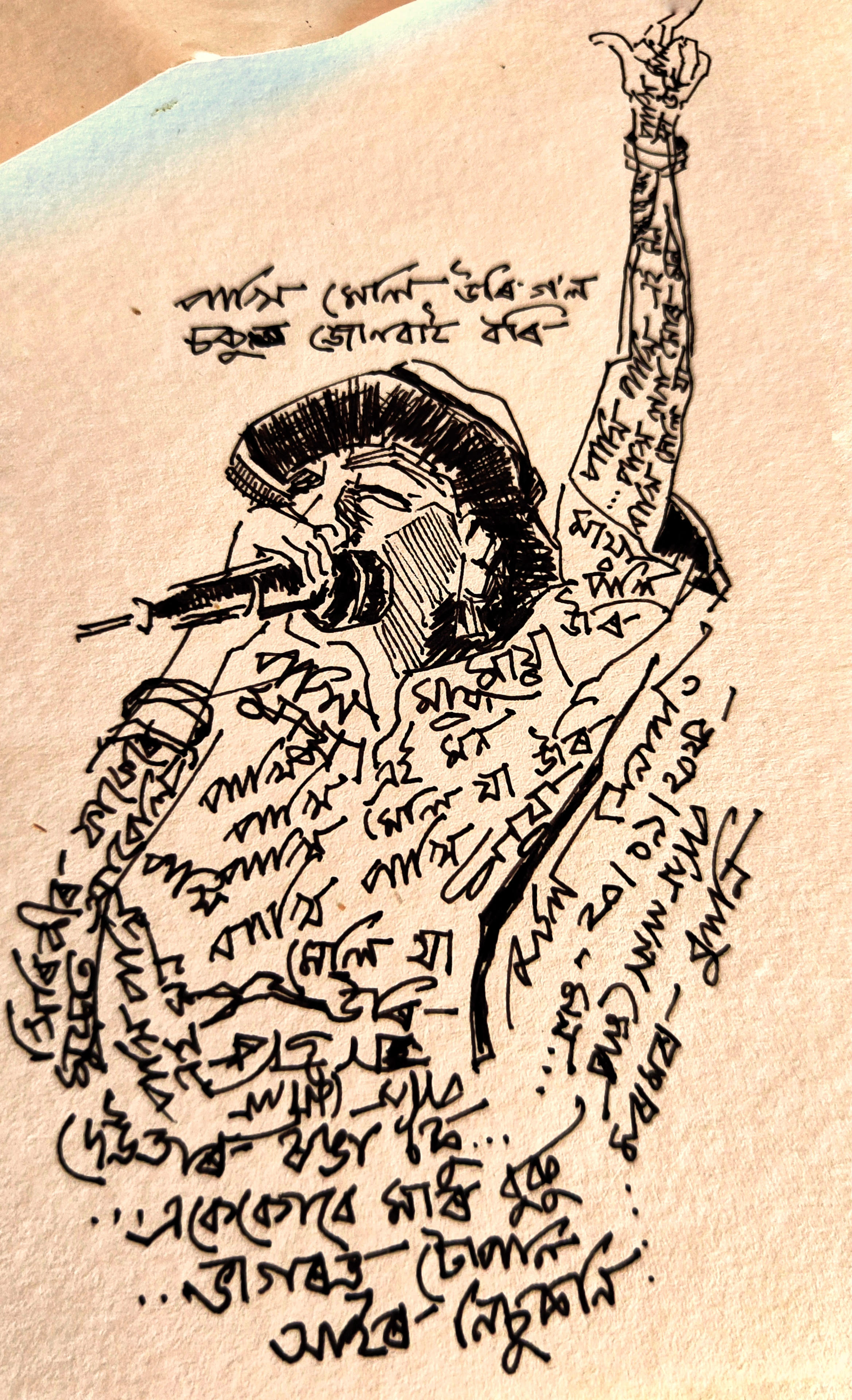
It was a world record of having the fourth largest gathering at a funeral procession that brought a name into focus -- Zubeen Garg. People across India, and even the globe searched up the name to realise suddenly what a phenomenon he had been. Assam, and the northeastern part of India had mostly been neglected by "mainland" India, and the same could be applied to how such a talent, despite singing at least 40 Hindi songs for Bollywood (isn't that the criteria for recognition in India?), did not become a household name. Reams have been written eulogizing Zubeen since his death, yet he still needs to be deconstructed for those who do not know him, but are just now beginning to be aware of his greatness.
While musicians worldwide, from neighbouring Bangladesh and Pakistan, to African nations paid tribute after his passing by singing his songs, most people in the country are learning about him perhaps by seeing snippets on social media reels. While some are in awe of his vocal strength, his lyrics, his philantrophy, of his social awareness, of his actions for the environment and love for animals, for having a spine when most artists and celebrities in the country don't dare to speak up and stand against the authorities, many are doubting his talent. "Used auto tune in the recording studio", "his voice is just ok", "can't hold a tune", are a few phrases that are being bandied around by people who have known him for a short three weeks. Regrettably, many of the reels are from Zubeen's stage presence in the last few years. Years, where he kept saying that he was tired of it all. That he wanted to quit. For, the people whom he trusted were the ones who were sucking him dry. Health issues and his drinking compounded the problems. So, these reels and videos are definitely not the most authentic source to understand the person. Perhaps content creators need to time stamp their videos, so that people eager to understand Assam's Heartthrob would not get the wrong picture.
Zubeen was nearly pitch perfect. However, singing 38,000 plus songs in 40 different languages in a span of over 30 years will definitely take a toll on any singer. But still, Auto tune and Zubeen somehow do not go together. As he once famously said, "I never sing out of tune. Even my dogs at home bark in the right tone". That was said in a half-joking, half-serious note. He knew his worth, and did not hesitate to say it. "Assam is famous for three things - tea, rhino and Zubeen Garg", he used to proclaim. "I am a legend" was his oft repeated phrase, and he was prophetic when he said, "moi morile Mumbai Bangalore bondho nohoi, kintu Oxom tini dinor babe bondho hoi jabo." (No holidays will be declared in Mumbai or Bangalore when I die, but Assam will shut down for three days.) Little did he know, Assam came to a grinding halt for far many more days, and that for many, a part of their lives came to a stop after 19th September; hearts numbed, never to beat exactly the same.
He was a star, but did not shy away from showing his weakness in front of the people. Tired? He would say so clearly to the audience, promptly lie down on the stage, sleep for a while, and then get up to belt out songs for the next 2 hours. He was a genius incomparable, though a flawed one - with mood swings, deciding suddenly on stage that he did not want to sing at all for some perceived insult. And expecting the audience and organisers to just understand. He was like a child, wearing his emotions for everyone to see. One famous emotional outburst was when he felt that a senior musician who had been ailing was insulted by an organisation. Both of them had been invited for an interview, but they reached the venue only to find no one there. So, the next time the organisation invited him to perform, he suddenly lost his cool, and climbed up an electrical pole in protest. He was unapologetic about his quirks. People laughed once at his dressing sense, at the fact that he oftentimes wore two different shoes on his feet. It might have been a gimmick, but did anyone bother to ask whether he wore different shoes because his foot sizes varied, or because he had health issues with his feet that required special footwear? Did anyone notice how often he used traditional motifs from the various ethnic communities in his outfits? The fact that he wrapped the gamusa as a turban pinpointed his love for everything Assam.
A composer, a lyricist, a singer, a filmmaker - many were the hats he wore. Zubeen had moved to Mumbai after establishing himself in Assam, and was doing pretty well, working with AR Rahman, Anu Malik, Pritam, Jatin-Lalit, Salim Suleiman, Ranjit Barot, Anand Raj Anand and numerous others. But he saw that Assamese music was being overtaken by Hindi songs and Bollywood, so he decided to go back and create music that would once again attract the youth to their roots. "A king cannot stay away from his kingdom," he proclaimed. Having lived across Assam as a child, for his father had a transferable job, he picked up folk music and wove that into his music. And that perhaps made his music so popular. For he used beats and notes and instruments that resonated with the culture and heritage of our state. He was extremely well read, and books were his passion. His speech on Assamese folk music at a convention in Tejpur, organised by a literary organisation has been archived for future research scholars. He was knowledgeable on a wide range of subjects - literature, music, films, politics, football, history.
When he saw Assamese movies as a dying art, he made films like Mission China and Kanchenjunga, in the style of Bollywood blockbusters, ensuring a resurgence in movie-goers. He wrote the stories, did the screenplay, directed, and acted, besides of course composing the music. The movies might not be top notch, content wise, but they did succeed in what he had wished for - they brought about a new lease of life to Assamese movies. He had wished to make meaningful films in the second part of his life, cutting down on the frenzy of producing or singing songs ....15, 20, even up to 36 in one night, showing his speed, passion and stamina.
Zubeen called himself a social leftist, following a belief that society should reduce inequalities, prioritizing the welfare of the people as a whole over private profit. He cared not for how much he had earned, as long as he had enough to help others. A self-confessed atheist and apolitical figure, he was socially very conscious even offering up his home as a care centre during the Covid pandemic. The list of his interests and philanthropy is endless. He once saw a little girl on the street being chased late at night. He got down from the car, to find that she was working as a domestic help and was being abused by her employer. He promptly took her to lodge an FIR and made sure to attend every single court case until justice was delivered. He helped countless others -- students, patients, out of luck musicians ... no PR, no fanfare, just pure philanthropy. When CAA exploded, he stood steadfast with the people, unyielding. Zubeen was there again as a shield, preventing the ago old trees around Digholipukhuri being chopped down to make way for a flyover.
The number of animals that stood near his portraits (that people had put up as places of homage across the state) - horses, sparrows, crows, dogs, a massive bull, a crane that stood the whole day and eventually died, a monkey that would not let go of the photo frame...it was astounding. They perhaps understood his love - how he used to adopt numerous birds and animals which were injured, nurse them back to health and then release them back to the wild.
Zubeen was a soul who wove amazing poetry, and a voice that was purity itself. A voice that stood heads above everyone else. Not just in singing, but in being the voice of the people, inspiring others to be the best version of themselves. He however drained himself in giving - music, love, passion, help, not expecting much in return. In what was his last interview, with novelist Rita Choudhury in her podcast, he rues not having met her earlier, for he had met very few people who could be on the same wavelength as his. Being a genius sometimes means being lonely, isolated, misunderstood. Perhaps he too needed to be taken care of, to be guided, to be loved for himself instead of the icon that he was.



.jpg)









 (1).jpg)