
THUMBPRINTNE POETRY COLUMN
POETRY EDITOR ANANYA S GUHA'S COMMENTS:
Mousumee Baruah’s poems evoke a strong nostalgia and an overwhelming feeling for the past. However when there are attempts to make the connection between past and present there is disruption and a possible breakdown of communication
----------------
Hiraeth
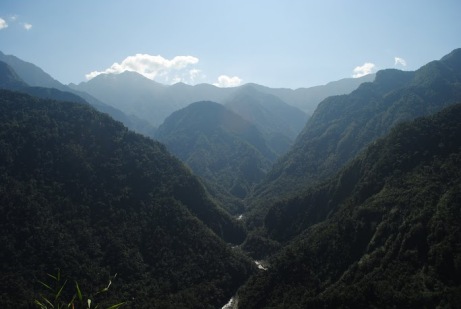
With winding roads of the laid-back hills,
My thoughts wander — tinged with mysterious grief and thrills.
Along with the whistling breeze, and rustling leaves of oak and pine,
I look at you from my window, and yearn, and pine.
You look like that home — a home that never belonged to anyone,
Yet we belonged to it so deeply, still there, witnessing many dawns.
Gathering rust on tin, moss on the damp wall —
Lonely, abandoned, but still standing tall.
That home gathered moss, for it lacked a true root,
But our laughter and sweet quarrels were wrapped there for good.
We all disintegrated in a blustery breeze
That blew from a deceptive ridge.
I look at you now — evoking memories of happier days;
The sight of that house stirs a powerful sense of hiraeth,
Though I have moved away.
-------------
In That Fading Hour
We sat together—
In that fading hour
When mosquitoes buzzed near our ears,
And frogs croaked from afar—
Like a chorus of ducks
Echoing through the fields.
The sky was not moonless,
But the moon lay hidden,
Beyond our reach —
Beyond our realm.
The priest at the nearby Naamghar
Beat his Doba,
And the water hen let out a sharp, startled cry —
A sudden shriek, cutting through dusk.
Was it fear, or joy?
We never knew.
We sat on that bench.
Now, the rich call it a “bed bench,”
And keep it at the foot of their beds —
For aesthetic charm, or for storage.
But for us, we bucolic people,
It was our sofa —
Our throne in the portico,
Beside the tulsi plant and a blooming champa tree.
You asked me to light the dhuna, to chase the mosquitoes.
Both too lazy, I said, “You go.”
We stayed still —
And time passed.
Even the mosquitoes, tired of us,
Left on their own.
Now when such evenings return,
Tell me — how can I not ruminate?
They say I dwell in the past.
But this —
This is what my heart remembers,
And is full of.
(Naamghar : A place for vaishnava kirtan. Dhuna: a fragrant smokes, incense burner to get rid of
mosquitoes, Doba - drum)
---------------
The Scent of the Lost Afternoons
Today’s weather feels like the land I once lost,
Cloudy, resembling the place where I used to be.
An alley shaded by Gulmohars, bright and captivating.
Where mothers waited near shades for yellow buses to arrive.
Children stepped off, running into their mothers’ open arms.
Mothers relieved their tender shoulders from their heavy bags.
Afternoons wore the scent of fish fries, distinctly lingering there.
I once saw a lady hurrying to the backyard.
Perhaps breaking her seista, gazing up at the gray sky,
Picking clothes dancing on the line hung in the backyard.
Her speed matched the blustery wind of that day.
Does the kitchen garden still exist in that same backyard?
Do pumpkin plants still crawl around the ground?
Gourds and cucumbers creeping along the old fencing that remains?
Or have builders’ hoardings claimed the fertile soil of before?
New children and mothers may now grace that very alley.
The smell of fish fries might still fill the air.
But I’m unsure if Gulmohars still stand tall today.
I heard alleys were widened, new roads developed.
Flyovers built, the moon’s sheen fading beneath bright streelights.
I wonder, where do mothers now stand in the afternoons?
Do flame trees still provide the shade they once did?
Perhaps, colorful umbrellas, a manufactured shade,
Replace the natural canopy of Gulmohars.
-----------------
With Kidult Streak
Looking at the neat and ashen sky — pellucid, yet subtle,
I have no idea when my foot caught in the curvy alley, and I stumbled,
while gazing at the meditative Luna,
with her effulgent halo — sitting like an awakening Buddha.
The night bathed in tranquility, with nectar
mixed with silvers.
The leaves of the lonely tree wear silver jewelry,
celebrating with the breeze in revelry.
It looked so much like that hibiscus tree — now no more —
when, on a full-moon night, I inked verses from my core,
and wrote that the leaves of the hibiscus tree near our portico
draped in the silver of Luna —
a gift from her glow.
Same muse — evergreen like paddy of July,
ripe with wisdom, like grains of November gold.
Only the body grows old.
Still, I compare the leaves of a nameless tree,
wearing silvers, with the silver of that long-lost hibiscus tree.
Same full moon night, same thought — whether twenty or seventy, we all sneak,
and stumble into a curvy alley — with a kidult streak.
ABOUT THE POET:
Mousumee Baruah is a poet, storyteller, and self-taught artist whose debut poetry collection “The Castaway” has received appreciation and a few literary awards. She began writing poems during her school days, and her works have appeared in newspapers like the The Sentinel and other national and international platforms. She co-authored numerous anthologies during pandemic. A winner of numerous literary honors, including first position on-the-spot poetry writing competitions, she continues to be celebrated for her reflective style. As an artist, she has been awarded the Silver Award by Manikarnika Art and other organizations, showcasing her creative expression through both words and colors.



.jpg)








 (1).jpg)


