Editorial

Honeymoon murder reinforces stereotypes

Ananya S Guha feels that we can combat vitriol with quiet magnanimity

ANANYA S GUHA

The recent murder of Raja Raghuvanshi in Sohra, shows clearly two or three examples of how bias is embedded in the so-called 'mainstream'. One is treating the NE Region as vague peripheries. That is so because the entire region is considered as one single unit. Secondly the region is regarded as an area of darkness, where witchcraft mumbo jumbo is practised. Thirdly, the hills are ‘violence-prone’. Every part of the country is violence prone in some way or the other. Creating false narratives about the region or the state of Meghalaya is the pastime of many media houses. They glibly assumed that Raja Raghuvanshi was murdered by the locals, without waiting for the investigations to be completed. In the process the mainstream media houses created not a dichotomy, but a division, augmented to foster the them and us story, which works in various ways in the country.

The result? Obviously acerbic reactions in the midst of provocation.When will this so-called ‘ mainland’ India, stop creating schisms in our diverse and pluralistic societies? There were angry reactions to the painting of Meghalaya as a land of crime. ‘Crime-prone hills’. Are the entire hills crime prone, or only a part of it? Which part of Sohra, or the entire state? 

One writer, decades back, had described India as an experiment. Perhaps some people want the experiment to continue, looking askance at the supposed peripheries. That is because the country starts in Delhi and ends in Patna, that is the mentality of some people. What a travesty! Even today I am shocked to see that many in the mainland do not clearly know about Shillong and Meghalaya. One feels the pinch and it hurts to say the least.

These are lessons we must learn. That quite a few people are not interested to probe into the truth. So when the businessman was murdered, the response was tepid: Oh, one of those as usual. It hurts and pains me to see such a response: crime-ridden hills, sorcery and ghosts. Rudyard Kipling believed in the white man’s burden of educating and perhaps even chastening the natives. But his stories such as “Gunga Din” have a human touch, if not a humane one.

Recently, two incidents took place in different parts of India, which I am tempted to mention. One was in Calcutta where a lady was speaking in Bengali. Another lady accosted her, and asked her to speak in Hindi. Again in Bangalore, a bank employee, insisted on speaking in Hindi, whereas the man insisted that she should speak in Kannada. Such incidents only create division; cultural recalcitrance. In the Bangalore instance, was it that neither the man or the woman knew Kannada or Hindi or was it feigned? But this can be a conjecture at best.

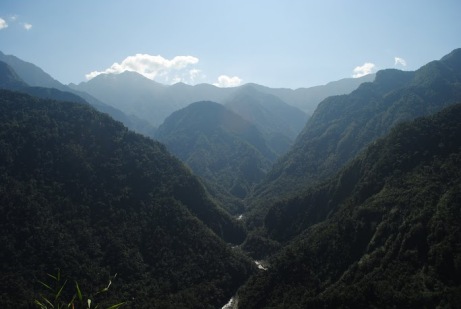
In India stereotyping linguistic communities have taken place. In our school days all South Indians were known as ‘Madrasis’. It was not only a demonstration of ignorance but sheer insensitivity. Similarly, today North East India is looked upon as a ‘dark’ region, where atavistic passions prevail. The response of the media to the Sohra murder came at a time, when the police and the local community were on the search for Raja Raghuvanshi, in the midst of inhospitable climate and terrain. The response of the people  of the Sohra region was compassionate. They decided to pay a candlelight and floral tribute to their guest. It was like a Christian response, responding by love not animosity. Again the people of Sohra have not yet demanded another apology, but have requested one, cutting across print, electronic media and social media handles. One apology that will be used in print, electronic and social media handles.

The Sohra incident also exemplifies how the North Eastern Region, specifically Meghalaya has been taken advantage of, so that all blame would point at the local communities. This is mainstream people’s way of using the place so that local reputation will be sullied.

All this is saddening. There is sadness when people are not sensitive about localisms and local culture. The whole murder was premeditated and planned for quite some time. And was Sohra chosen, because it is a ‘crime prone hills’?  Stereotyping North East India is nothing new. Worse still is the ignorance. Even in the 1990s a Professor of history, in a central university, thought that Imphal was close quarters to Shillong!

But vitriol should not be answered by vitriol. It should be done as the people of Sohra did -- quiet magnanimity with an inner resilience. That is what wins finally.

The attitude of Raja Raghuvanshi’s family initially was one of skepticism. They doubted the work of the Meghalaya Police but retracted later, when they saw what a neat job the Meghalaya Police had done. This is again attitudinal, and a superiority complex. In fact Meghalaya Police getting vital clues later on signed off the murder ‘ mystery’ with elan. 

India is no longer an ‘experiment’. The country has withstood the ravages of time and has resolved opposites, conflicts, and antinomies. That is the Indian nation, pluralistic, diverse; yet one.


Ananya.S. Guha45 Posts

used to work with the Indira Gandhi National Open University, Shillong (Meghalaya) as an Academic Administrator. He has over 30 years of teaching and administrative experience. He has six collections of poetry and his forms have been published world wide. Some of his poems are due to appear soon in an Anthology of Indian Poetry in English to be published by Harper Collins.

Sunset Years

ANANYA S GUHA sums up the discussion on “Old Age Homes” at the recently held Shillong CALM Festival 2013

Sun, 19 May 2013

The Calm of the CALM Festival

Picturesque Shillong gears up to celebrate creativity in the arts, music and literature writes Ananya S Guha

Mon, 22 Apr 2013

Fiction Online

Ananya S Guha writes about the eFiction Magazine, a literary online journal which blends tradition with modernity

Mon, 25 Mar 2013

Peace in Violence

Ananya S. Guha analyses the nuances of Northeast Indian Poetry

Tue, 28 Feb 2012

All for Land

The struggle for land seems to be the crux of all conflict in the region, writes Ananya S Guha

Wed, 01 Aug 2012

One Sohra Summer

Iadalang Pyngrope's book is a delightful blend of history and fiction writes ANANYA S GUHA

Tue, 20 May 2014

Poetry of Darius Cooper

ANANYA S GUHA traverses multiplicity of worlds in the poems of Darius Cooper

Wed, 07 May 2014

Mosaic

Iadalang Pyngrope's poems are experiential totality writes ANANYA S GUHA

Mon, 10 Mar 2014

Fable of the region

PETER W INGTY's book is a interesting exposition of certain historical truths writes ANANYA S GUHA

Fri, 17 Jan 2014

Tea Motif

NINA HARKNESS's novel straddles three decades in tea estates writes ANANYA S GUHA

Thu, 09 Jan 2014

Honour for Temsula Ao

ANANYA S GUHA chats with Sahitya Akademi award winning writer TEMSULA AO

Sun, 22 Dec 2013

Media Matters

ANANYA S GUHA ponders over the role of media in India

Mon, 14 Jul 2014

Rewriting history

ANANYA S GUHA looks at the alienation question of Northeast India

Tue, 03 Jun 2014

Reflections and dreams

ANANYA S GUHA urges to give free fictive imagination to one's dreams

Sat, 29 Mar 2014

Christmas and Me

ANANYA S GUHA gives a flavour of Christmas in Shillong

Sun, 22 Dec 2013

Paths and Stones

ANANYA S GUHA tries to sing a song of stones

Wed, 24 Jul 2013

A poem happens

ANANYA S GUHA on the birth of a poem

Thu, 13 Jun 2013

Fractured Mindset

Northeast India: Where does alienation stem from? The sub nationalism or nationalism that was at stake through the tortured histories of some of the states of Northeast India is the crux. This matrix has been lucidly evoked by Sudeep Chakravarti's book Highway 39 Journeys through a Fractured Land. Ananya S Guha probes into the causes which perpetuates an alienated mindset in the dialectics of mainland and outland.

Sun, 01 Jul 2012

Soccer in Shillong

ANANYA S GUHA reminisces over soccer-soaked Shillong days

Thu, 12 Jun 2014

Independence Day and Me

ANANYA S GUHA recollects memories of Independence Day celebrations in Shillong

Tue, 13 Aug 2013

A new thrust

The Thumb Print Conversations at the Shillong CALM Festival reiterated the need to obviate misconceptions of the region writes ANANYA S GUHA

Sun, 12 May 2013

Storm in CALM

The countdown for Shillong CALM Festival 2013 begins writes ANANYA S GUHA

Fri, 03 May 2013

Politics of Honesty

Even his worst adversaries admit that Tripura chief minister Manik Sarkar is an impeccably honest man, a rare breed among politicians today writes Ananya S Guha

Wed, 13 Mar 2013

The Sardar we know

ANANYA S GUHA analyses the recent debate over Sardar Patel

Fri, 01 Nov 2013

Liquid Ambience in Poetry

Mitali Chakravarty’s poems alternate between spirituality and the down to earth.

Sun, 28 Jul 2024

Ode to the hills and pines of Shillong

Poetry Column features Shillong poet Daniel Ebor Challam

Fri, 02 May 2025

Poems with a dangling question mark

Saikh Md. Sabah Al-Ahmed's poetry is embedded in pathos and lyricism

Mon, 26 May 2025

Poetic Vision of a Young Adult

A young poet covers themes from wars to other social injustices

Fri, 30 May 2025

Poems that explore love and injustice

Arunav Barua's poems tend to end with scepticism

Sat, 31 May 2025

Everyday Poems

Mollika Lahiri's poems evoke responses to regular happenings

Thu, 12 Jun 2025

Honeymoon murder reinforces stereotypes

Ananya S Guha feels that we can combat vitriol with quiet magnanimity

Tue, 17 Jun 2025

Of Christmas carols, cricket matches and cold winters

CHILDHOOD TALES: Ananya S Guha's childhood revolved around the seasons of Shillong

Sun, 29 Jun 2025

A Universal Poet

ThumbprintNE Poetry Column features young poet Shaheen Akhtar

Wed, 30 Jul 2025

Poetry as philosophical aphorisms

ThumbprintNE Poetry column features a sensitive poet, Jharna Choudhury

Wed, 06 Aug 2025

Rationality in Poetry

ThumbprintNE Poetry Column features Aman Verma

Sun, 17 Aug 2025

Poems with a rhythm

ThumbprintNE Poetry Column features young poet Gargisri Goswami

Mon, 25 Aug 2025

Symbolically Charged Poems

ThumbprintNE Poetry Column features an evocative poet Lalnunsanga Ralte

Wed, 29 Oct 2025

Nostalgia in Poetry

Poetry Column features evocative poet Mousumee Baruah

Wed, 03 Dec 2025

Thematic unity in poetry

Poetry Column features Mousumee Baruah

Wed, 03 Jun 2026

Rhyme and Rhythm

Poetry Column features Shillong-based poet Jasper Elias

Thu, 11 Jun 2026

Brevity of Wit

Poetry Column features Sutputra Radheye

Tue, 21 Jul 2026

An Elegiac Tone

Poetry Column features Shyamolima Saikia

Tue, 21 Jul 2026

When the young take to ideas

A poem by Ananya S Guha

Fri, 07 Aug 2026

When poetry intersect family life with politics

Poetry Column features Aditya Shankar

Tue, 25 Aug 2026

A Soft Personalised Cadence

Thumbprint Poetry Column features Maitrayee Deka

Mon, 26 Oct 2026