THUMBPRINTNE SERIES: CHILDHOOD TALES
THE ROMANCE OF UZAN BAZAR: PART III
Madhu's channa chur held the weight of ideas and the spark of jokes, writes Sattyakee D’com Bhuyan
Long before Guwahati was draped in the neon glaze of shopping malls and corporate chains, when the streets still smelled of rain-soaked earth and the hum of cycle rickshaws filled the air, there was a man who defined the flavour of an era, one crunchy bite at a time. His name was Madhu, but in the tightly woven gullies of Old Uzan Bazar and Pan Bazar, he was immortalised as Madhu Chanawalla or Madhu Ka.
In those pre-Haldiram, Bikaji, and Jabsons days, when “mixture” hadn’t yet turned into a pan-India commodity, Madhu Ka’s modest cart held within it the pulse of vintage Guwahati. Packed in old newspaper pages, or old school, college note book sheets, his signature Channa Chur was a blend of roasted gram, peanuts, onion flakes, a whisper of mustard oil, and that one mysterious ingredient, never revealed, only relished. Back then, 781001 wasn’t just a pin code. It was a neighbourhood, a culture, a slow-paced storybook. And Madhu Ka was one of its unwritten chapters.
Neither poet nor politician, not even a teacher or shopkeeper, he was something more humble and far more memorable: a seller of the finest Channa Chur that Uzan Bazar and Guwahati for that matter had ever known.
Come evening, like clockwork, Madhu with his small glass and wooden blue and maroon cart would park himself outside MCME School, just next to our house at 6, Bhuyan Howely. Mornings saw him quietly appearing near the tall, proud gates of Handique Girls’ College, the soft breeze from Dighali Pukhuri gently ruffling the pages of notebooks and the starched dupattas of rushing students. His presence was constant, timeless, as if the very rhythm of Uzan Bazar’s day could not begin or end without the rustle of his paper cones filled with masala channa chur.
From what I sweetly remember, there was something musical in the way he prepared it, a flick of the wrist, the shimmer of chopped onions, coriander, green chillies, a hint of lemon, and that mysterious masala mix only he knew. The sound of him shaking the mix on paper was as distinct and comforting as the evening azaan or the temple bell chiming in the distance. And the unforgettable last flick in the air before closing the cone was the magic!
But what truly made Madhu’s Channa iconic was it's unlikely yet perfect pairing with spirits of the bottled variety. In the late 1970s and 80s, drinking at home was rare, almost taboo. But our house, the Bhuyan Howely, was always a bit ahead of its time.
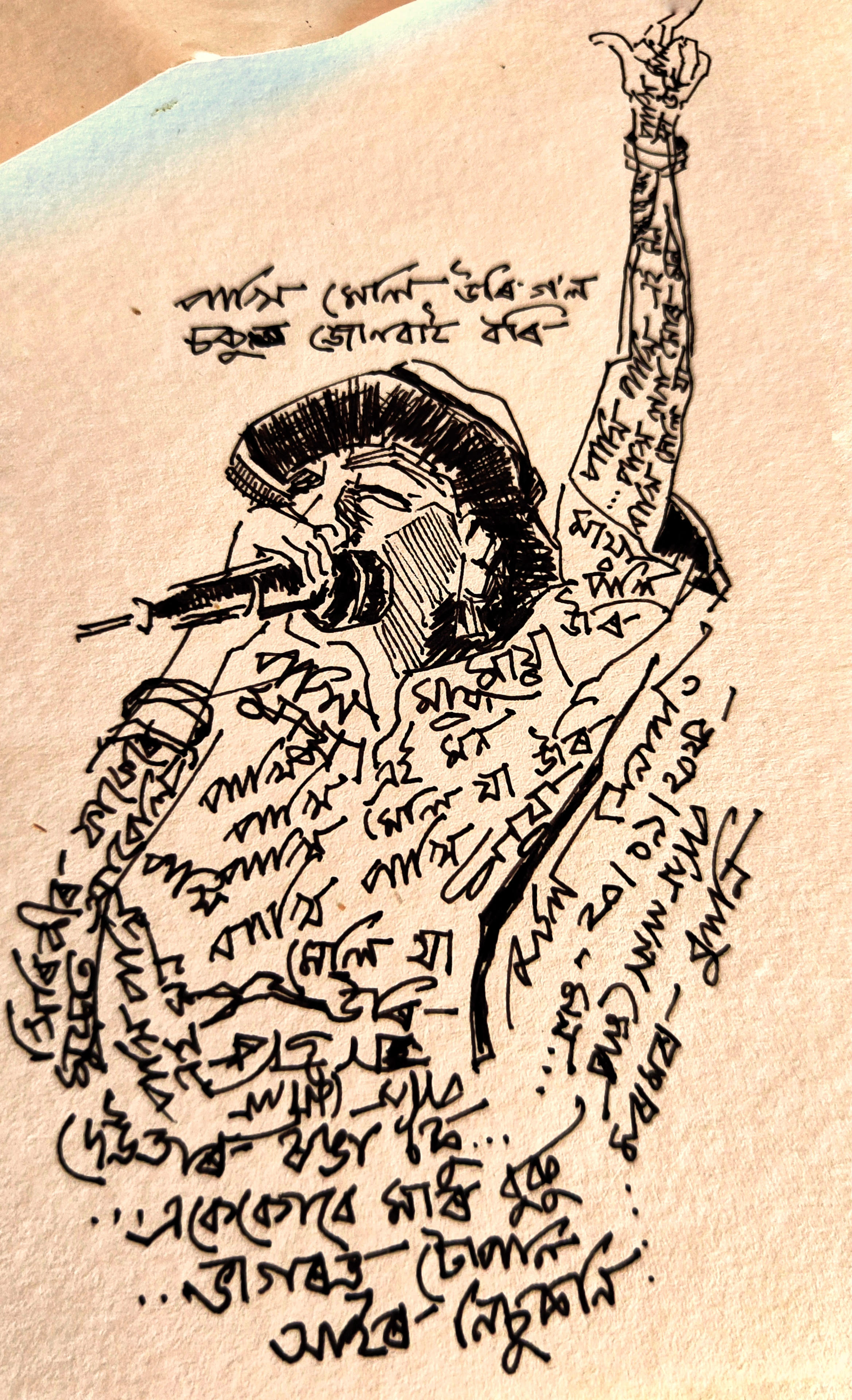
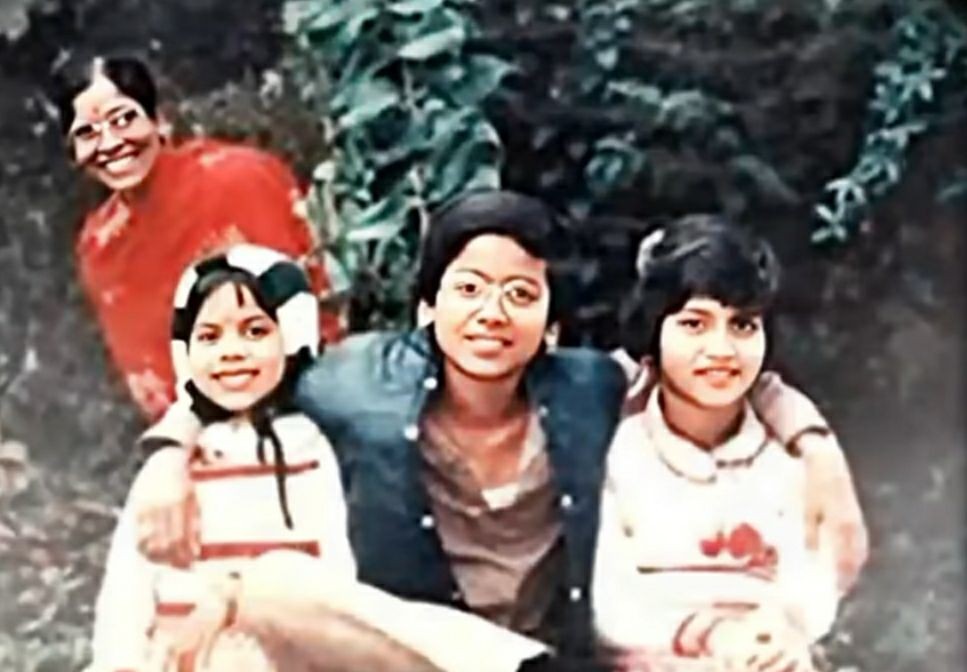
My father, the ever-gracious and much-loved Late Dhiru Bhuyan, actor, director, filmmaker, and AIR broadcaster, would host regular evening gatherings. These weren’t just drinking sessions; they were soirées of the soul. His dearest friends would arrive by dusk: the unforgettable voice and warmth of Jayanta Hazarika, his best friend Ramen Das (whom we called Babloo da), the sharp and humorous Sachin Barua from Hindustan Times, and the ever-gentle, poetry-in-his-eyes Hiren Bhattacharyya.
As conversations flowed about music, theatre, politics, literature, and love, so did Madhu Ka's Channa in those iconic paper cones. It wasn’t just a snack; it was an elixir. The perfect sidekick to a neat peg, the crunch that punctuated laughter, the tang that balanced the sharpness of ideas exchanged. His salt mix with a few spices which I have mastered over the years is still present in our dining table to go along with all meals and snacks! He had handed over cone after cone, no fuss, no fanfare. That channa, believe me, held more than chickpeas and spice. It held the weight of ideas, the spark of jokes, the lull of memories in the making. It paired with whisky like it had trained for years. Tangy, crunchy, soul-stirring. The kind of snack that lets conversations pause without falling flat.
Back then, Guwahati was a different city. No high-rises, no chains of coffee shops. Uzan Bazar was a living, breathing character, and Madhu was part of its very essence. The verandahs echoed with stories, the Assam-type houses stood proud with their red oxide floors and bamboo ceilings, and the evenings were lit not with fairy lights, but with the glow of conversation and companionship.
Madhu Ka always in his white kurta and dhoti never rushed. He never changed his recipe. His was a quiet artistry, almost monastic. He wouldn’t boast or bargain. But if you knew, you knew. His presence was comforting, like a raga that plays in the background of your life without you realizing how deeply it anchors you.
There was a day I will never forget, a humid August afternoon when the world seemed just a little too cruel for a boy of twelve. Schools opened after our glorious summer vacation and I had flunked my Arithmetic exam again, and this time, spectacularly. The numbers didn’t add up, the equations mocked me, and the red ink on my report card looked like it was still bleeding. I walked aimlessly through the lanes of Uzan Bazar, dragging my Bata “Naughty Boy” shoes and my spirit somewhere behind me.
Madhu Ka saw me before I saw him, perched as always beside his cart near the bend, peeling boiled potatoes (for his magical Alu Chaat) with the same reverence one might offer to temple rituals. I didn’t say a word. Just slumped onto the stone bench near him, my face carrying the weight of every wrong answer and every scolding that was sure to come.
He looked at me sideways, then quietly reached into his cart. From a special jar, the one he never brought out unless the occasion called for it, he pulled out a handful of his richest Channa Chur, (Dali Badam), a few golden-fried peanuts, a hint of green chilli, and just a whisper of masala. He wrapped it in an old yellowing page of The Assam Tribune, dated two years back, as if to remind me that time passes, and wounds heal. Without a word, he handed me the cone.
That cone was more than a gold star. More than any medal or high score could ever be. It was comfort, compassion, and a silent reminder that failure was never final. I laughed through my gloom. That was Madhu Ka, simple, sage, and always ready with a crunchy cure for the blues.
Now, years later, as the cafes with neon menus take over, and the city pulses with a different beat, I often find myself walking past those familiar spots in our neighborhood MCME School, Bhaskar Natya Mandir, Ideal Pharmacy, Handique Girls’ College, Dighali Pukhuri and wonder if anyone remembers Madhu Chanawalla. Does anyone recall how he helped soften our youth, spice up our evenings, and without quite knowing it, added flavor to the friendships and dreams that brewed in Bhuyan Howely?
This is not just a story of channa. It’s a story of a man who stirred a little bit of history into every cone he rolled. To those who know, it will always be: Madhu’s Channa, spiced with spirit, memory, and a sprinkle of Uzan Bazar magic. It’s about a man who, unknowingly, flavored our lives. Who seasoned our youth and friendships with his silent presence and spicy mix. Madhu didn’t sell channa, he served nostalgia, every day, for decades.
And as I write this, I realize he never asked for more. Not money. Not attention. Not even recognition. Yet he’s one of the finest memories stitched into the quilt of Uzan Bazar’s past. So the next time you walk past 6, Bhuyan Howely in Uzanbazar, or Handique Girls College near Dilghali Pukhuri, pause a moment. Imagine the paper cone in your hand. Feel the tang, hear the crunch, remember the laughter, and raise a toast to Madhu, to Channa, and to simpler times.
Some memories don’t fade. They just grow quiet. So let the Channa Chronicles continue… Because memory is a flavour, and Uzan Bazar still stirs its soul in paper cones, one story at a time.
.jpg)




 (1).jpg)