THUMBPRINTNE SERIES: CHILDHOOD TALES
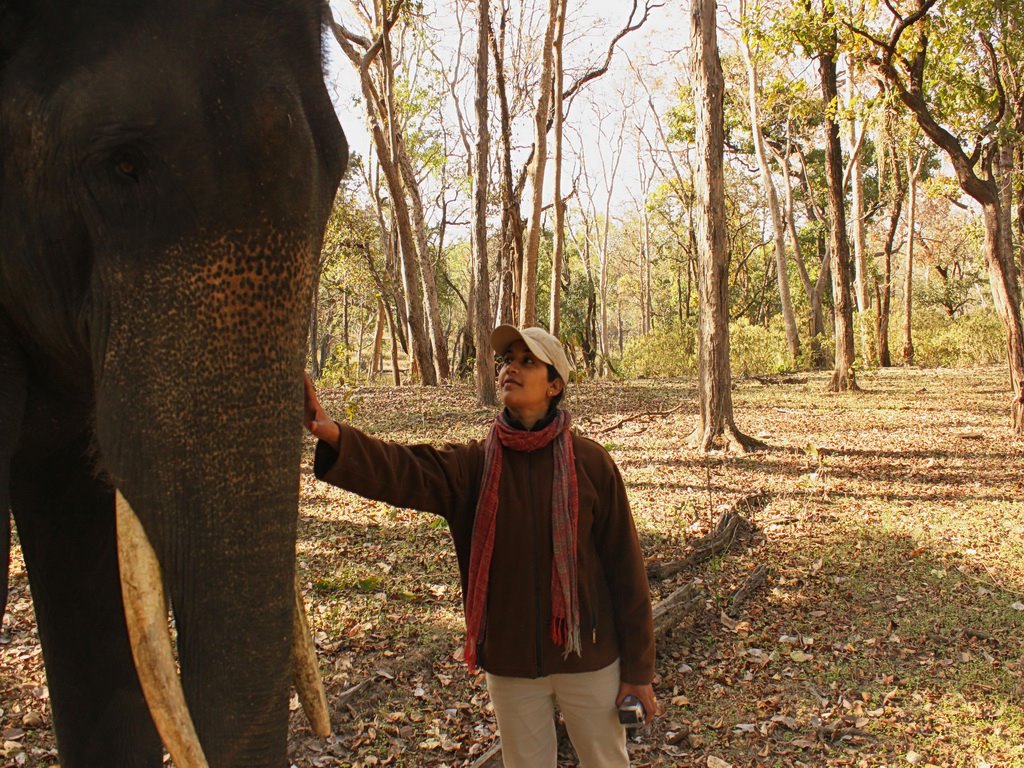
Naturalist Ratna Singh recalls her childhood on the outermost fringes of the now famous Bandhavgarh Tiger Reserve, in central India
We knew it was a Sunday when a bundle of newspapers for the past week arrived from town by bus at 7 am. One of the farm hands was deployed at the bus stop to receive delivery and race back home to my father. Dad would then go on to sit in his favourite armchair on the verandah and devour the newspapers over the next few hours, beginning strictly from Monday, and of course ending with Sunday. It did not matter that he heard the news thrice a day, every day. The news schedule of the house was thus; sometime around the crack of dawn Grandfather and father heard the Hindi broadcast, ending with the national song Vande Matram in which anyone around was obligated to join. Afternoons, post lunch was the Urdu news, while the evenings were reserved for the Hindi, followed by English bulletins.
The region was remote, hours from any city with a twice daily bus service that connected the village to the nearby one-horse town. We had the only phone in the village – which meant we needed to first dial the exchange in the city and ask to be connected. And all of this till almost 1990! The family were thus hyper vigilant about not falling off the planet, and hence the obsession with the news: the reading of it, the listening of it and then the discussing of it. Home was a small village on the outermost fringes of the now famous Bandhavgarh Tiger Reserve, in central India. We lived in a sprawling stone edifice that had been our family home for over 300 years. Generations of children had been packed off to distant boarding schools in the country and beyond. However, each time we journeyed back home for holidays, it was like stepping back in time into the most comforting and decadent of cocoons.
My childhood was outdoorsy, both at school and at home. We played various games at school and then came home and competed with siblings and cousins. It could be archery one evening or racing down to the mango orchard and back the next day. We would spend hours each summer, frolicking in the river or in the village pond with its profusion of water lilies and buffaloes beating the heat along with us. I always had a bunch of animals around when growing up; horses, dogs, cows, buffaloes, ducks and chickens. Troops of Langur and macaques raided our home several times each week. They would come for the fruit in the orchard, or the raw mango slices drying for pickle. Once a langur baby got left behind. It was promptly christened ‘Chulli’, which roughly translates into ‘feisty little one’, in the local language. Well, Chulli made herself at home quite quickly. She’d be fed a variety of fruit, and had quite a discerning taste, spitting out any mouthful that wasn’t just right. She stayed about a week with us. Alas, when her kin visited next, she happily scampered off with them, without so much as a farewell glance!
Wild animals were regular visitors to fields and farms. People slept on makeshift lookout posts in the fields, beating cans to deter deer and wild boar from raiding crops. The lone village police constable often bumped into foxes, jackals and on occasion a tiger or a leopard sauntering through the village lanes after dark. As children, my brother and I collected all manner of things. Stones in various hues, smooth pebbles from the river bed, bright bird plumes and snake skins. Whenever we found a snake skin we looked around cautiously, lest the snake was still about.
Growing up on a diet of Bollywood films we firmly believed in shape shifting snakes guarding treasures and gigantic shells opening up to reveal humongous pearls. While in the films, the heroine went on to dance vigorously around the pearl; we expected to do no such thing. Our strategy was simple. Should we find a cobra guarding a mound of gold and silver in the forest, we would lure it away by placing a bowl of milk nearby. (Yes, we believed reptiles drank milk at that time, based on both films and a popular festival). With the snake busy guzzling the milk, we would pocket the treasure and run back home as fast as our legs could carry us.
We never did come across a treasure guarding snake, but I did come across a ‘pearl’ shell once. One afternoon we were out swimming in the river. As usual, trawling for interesting pebbles or shells, I picked this particular one and my heart leapt. It was unopened! This could only mean one thing, a most precious luminous pearl awaited. This was a serious discovery, I showed my brother and instantly the fear of it being lost, or worse, taken by an older cousin engulfed us. How do we keep it safe till we get home? My brother had an idea – ‘pop it in your mouth, no one will know’. Seemed sensible enough. So I did the needful and the two of us hurried home. Conversation on the way home was not possible nor necessary. Upon finding our parents at leisure listening to the radio, my brother blurted out the good news of our luck as I triumphantly took the shell out of my mouth. Mother had a strange expression, akin to nausea while father laughed out loud. We were puzzled at their lukewarm, nay, insulting reception of our fortune. Upon carefully prizing the shell open, I found a creamy liquid in which orange crustacean legs stuck out. It was a little crab, in the making. I think that incident had a little something to do with why I mostly eat vegetarian food now.
As I reminisce about my childhood, I am thankful for the carefree days and the connect with the wilderness. My days now may not always be carefree, but the connect with the wilderness remains.


.jpg)







 (1).jpg)


