.jpg)
JUNGLE TALES: PART 1
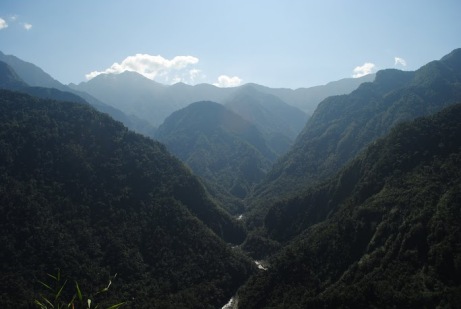
Pix: Beki River
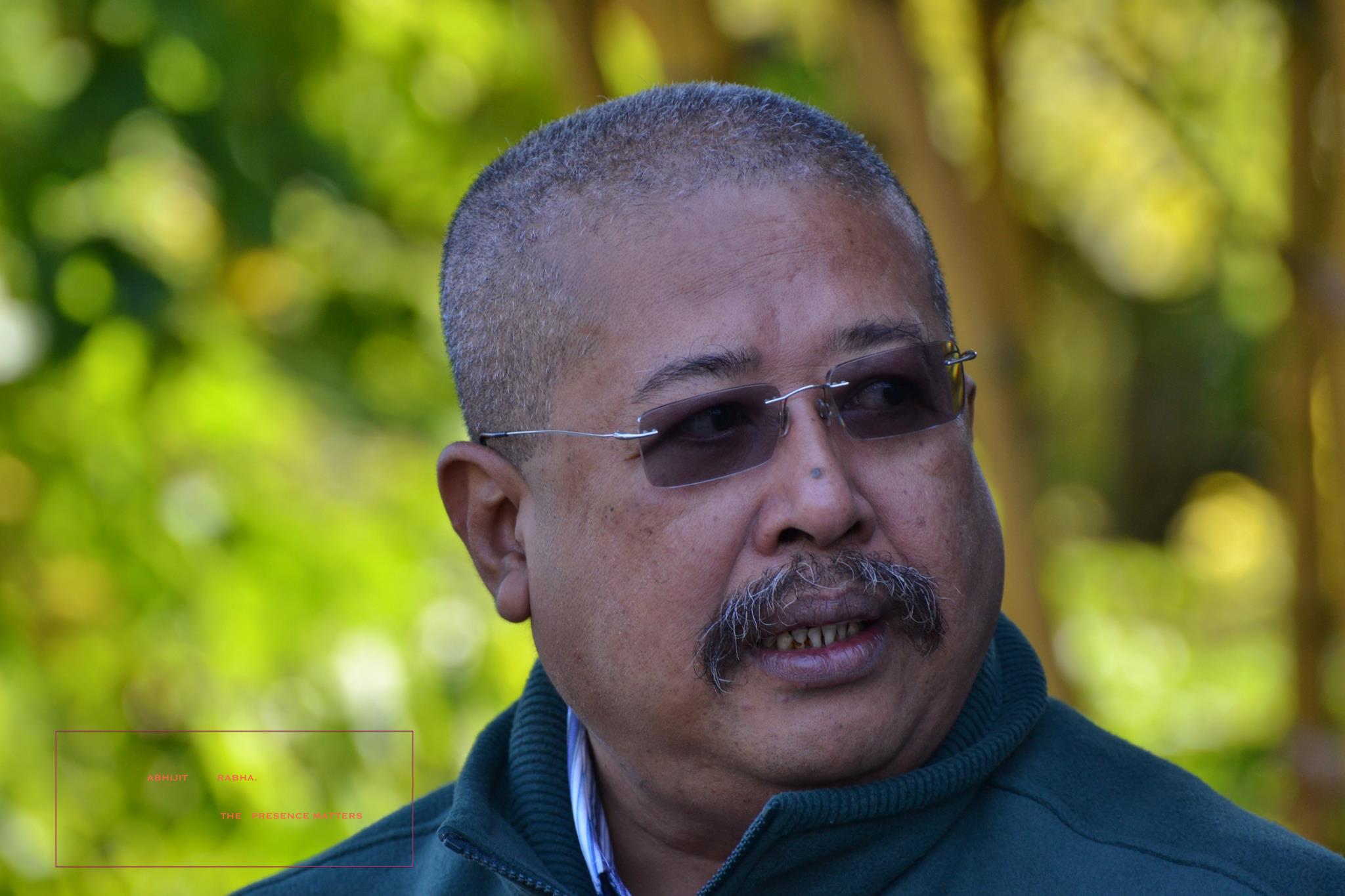
BY ABHIJIT RABHA
Eight years after the Sepoy Mutiny, circa 1857 Anno Domini, a war broke out in the territory of Bhutan and what was known as the Koch Hajo. It raged between 1864 to 1865. For nine months and nine days, pitched but decisive battles were fought ending in the Treaty of Friendship inked between the belligerents by the rivulet named the Rawa Khola at Sinchula. Thereby the Treaty was named. By the strength of the article (ii) of the Treaty, the entire Eighteen Dooars area was annexed to the British Indian Territory. The Dooars area ran along the foothills of Bhutan from the northern Bengal towards east till one reached the Khaling/Killing/Kalling Dooars of the territory of Durrung (read, Darrang). From Dalimkote to the river Sankosh, the Dooars in that tract were called Western Bengal Dooars.
Between the rivers Sankosh to Monas, were known as the Eastern Bengal Dooars. Then in the eastern proximity was the Kamrup Bijni across the river which gave the name to another heaven on this earth, Monas/Manas National Park. So, without the annexation of the Dooars, we would have never witnessed a conservation effort. This was a collateral gain in an effort to find a ‘refuge’ for the Rhinoceros in Assam. Thus were finally notified the North Kamrup RF, the Laokhowa RF and of course, the Prima Donna, Kaziranga RF. What the bureaucrat Arbuthnott precipitated in his panic latter voicing concern about the dwindling of the Rhinos all over in Assam and the narrow tract between the Mikir Hills and the Brahmaputra would be a grand story unfolding in the world of species conservation.
By 1950, the Monas Game Sanctuary, notified in October, 1928 and the North Kamrup Game Sanctuary were amalgamated to the Monas Wildlife Sanctuary.
It was a long crawl that the tract of land came from the days of yore when the tradition of ‘Shikar-Nikar’ was steeped amongst the nobles of the society from nearby Barpeta, Sarbhog and of course to the Maharajah of Cooch-Behar (MCB for short). The Terai grasslands extended through the Gobardhana and Athiabari Mauza area southwards on to the north bank near township of Barpeta, the Xatra township. An early colonial hunting report quotes a rhino killed by gunshot near Barpeta. One family of Barpeta even had a permission to rear a rhino calf (Pers. Comm., Samsul Huda Patgiri, senior photo-journalist, 2007). MCB reportedly hunted down rhinos and buffaloes in the said area before it reached the status of a Reserve Forest. However, he arranged Shikar activities for one Viceroy to India. At that time, the rhinos were reportedly to be abundant in numbers. Late Arthur Jones Warren Milroy, Conservator of Forests, Assam Forest Department of the Province of Assam had something interesting to put down in record: the presence of one horned Javan Rhinoceros in the North Kamrup and Monas Game sanctuaries.
However, this tract of land was never at ease. The unwanted killings of rhinos recurred in frequent intervals. After the independence of India, the Assam Forest Department had invited the Bombay Natural History Society (BNHS) to assess the tourism potential of Assam ( 1948-49). In that visit, the specialists from BNHS could find only a few rhinos present inside the game sanctuaries. Spurts of rhino slaughters kept on surfacing with the most major one in the mid 1930’s. One Assistant Conservator of Forests, C.A.R. Bhadran was sent to Monas Sanctuary for controlling the situation. He was capably helped by the legendary forest ranger, Bhakhru Ram Kachary. The reports of 1935 and thereafter, under J. Swer, Extra Assstt. Conservator of forests shows the situation to be ‘under control.’ The counterpart of N.K. Game Sanctuary, the Kaziranga game sanctuary had a similar misfortune going on where M. C. Miri, Extra Asstt. Conservator of Forests did his good work for bringing down the situation under ‘control’. After this episode, Mahi Ch Miri went down to the Black Fever and in harness. He did not live to see what his efforts brought. Nor was CAR Bhadran anywhere nearby to see how spasms of horrible times ended, hopefully forever where he devised a proper method of patrolling. Nobody talks or knows about this intrepid man. Even Bhakru Ram Kachary is a forgotten name.
What I did not know that trajectories or orbits of our lives would intersect each other for a cause, for a duty, for a love for a landscape so unique. Some wise guys opined that ‘God chose to come down to earth, he would certainly live by the river Monas.’ But, for me, it was a violent heaven of sorts.
My nascent bodily form inhaled the first breath by the bank of the great river Brahmaputra in the township of ex-Zamindary area of Dhuburi. This had been the district HQ which remained so till it maintained the status of an Undivided one since circa 1874. My birth year was in the frontier side of the ‘Roaring Sixties’. We were the ones who had an endless sky above, the unfragmented rains, the handpumps that dispensed drinking and potable water and so on. The rains had an intensity and could knock one off with its gusty nature, when not careful enough. We knew to swim in the pools of water that the rains left behind, along with the dragon flies and tadpoles. The nights were pleasant and the full throated cacophony of the fresh-water frogs banished the ennui and silence. We knew what mud and slush were, and the cockerels had perfect sense of timing to remind us of passage of time. The eggs came in baskets for a few rupees if one could dish them out. On the onset of hot and bleary season before the Bohag Bihu, the prices of eggs would hit rock bottom. And did we have nice egg curry of many types that mothers could rustle up and improvise upon.
Sixties gave way to the somnolent seventies. But had a nightmare in the fag end. The confusion and aimlessness of the times gave me a lesson of my life. Very well, if I penned a book, that could have been named ‘So grim is my valley!’ I am product and survivor of those hapless, hopeless, unsettled and audacious times. The brat who wanted to be a martial aviator, ended up a drop-out of Petroleum Engineering and eventually resurrected as a Indian Forest Service officer. A matter of choice, where the outdoors prevailed, brings me to this tete-a-tete with the readers today. I opted out from the post of an officer in the Reserve Bank of India.
Conservation of nature and natural resources is the most dangerous and toughest job in the frontline of such efforts. If one has true love for nature, possess true grit and commitment, it is for him or her or the community.
The unsettled times of the late seventies through the hiccups of the nineteen eighties had churned up enough regional and local geopolitical developments. Insurgency mounted high. And the forests turned out to be contested spaces. The ecological cost of such a sad state of affairs, if worked out, would be untold, colossal and mind-boggling. In that geopolitical meltdown, driven by socio-politics and economics of resources, there I found myself in Monas. And it was very shocking when I realized with a head-on collision with the hardest reality of life.
Forestry in Assam was a product of colonial rule in India (1874). It was used as an arm of exploitative policy of the colonial mores. From the speck of sand to the mighty elephant; from the fishes to the underground crude oil, the sector had a hand for garnering revenue for the ‘crown’. The forests were alienated long ago in 1865 by an act. Then came the Elephant Preservation Act, 1879 which enabled only the colonial government for elephant capture. The Zamindars like that of Mechpara Raj Estate suffered till an amicable settlement came his way. We, the foresters are the ‘Buccha’s of the Colonial times. To paraphrase Colonel Skinner (of Skinner’s Horse): ‘Hum sub junglee Hai, Hum Sub colonial Bucchey hai’ (with due apologies to the departed Colonel).
There was no such separate ‘Wildlife Wing’ in the hallowed Assam Forest Department (AFD). Now it is under a contemporary name encompassing Environment as a whole. Bang, dawned the year 1970 and we had a full-fledged wild-life admin. Monas, as a wildlife sanctuary came under the Western Assam Wild-life division. Late Kamal Chandra Patar was its first DFO in the office at the small commercial township named Barpeta Road Railway station. The earlier bifurcated product ‘North Kamrup Division’ shifted to Rangiya. Since 1956, the year of its creation, it was in the infrastructure at Barpeta Road, now under WAWL Division. Prior to 1956, the North Kamrup Game Range at Batabari (Mussolpore) looked after the sanctary since the British Raj under Kamrup Division. The collateral gain was good protection afforded to Daodhara-Subankhata belt of sub-Himalayan forests. From the erstwhile Ripu Game Sanctuary (circa. 1928), eastwards to Khalingduar RF via MWLS, the landscape belonged to an unbroken patch of long elephant country, one of the best in the world. With the launch of Project Tiger, this area came under the Project Tiger Monas (1972).
With the geopolitics of local and regional kind, raising its head, the space of the Project Tiger became a contested one. This was the worst that could happen. The sanctuary was geared for anti-poaching activities, not for the change that came savagely quick ,aided by insurgency. Resistance mounted by the authority of Monan was a losing affair. Casualties of the frontline staff mounted from west to east. The western flank of the Tiger Reserve was manned by forest divisions under the Western Assam Circle, which began to wither under losses to manpower and infrastructure under violent and uncertain plus unsettled conditions. Monas lost twelve of its frontline forest personnel. Rangers of Bansbari, and Khallingduar became victims of attack. The former is lucky to be alive. Another range officer of Project Tiger was kidnapped and we lost him forever. A concerted effort was launched by AFD and GoA for a stiff resistance and it stopped a downslide for sometime until the departure of Late P.N. Lahan. Later, the MNP (decl. September, 1990) would lose out dominance over the western and eastern segments. Monas became a no man’s child. Even if the Devil had to go there as its boss, he would not back away, for he would not have any choice but to achieve its comeback. Because even he loved the landscape of Monas.
But the reality was heartrending. The decline of international reputation and being close to be delisted from the World Heritage Site property list due to areas under encroachment, damages to infrastructure and biodiversity ad nauseum, the area came under sheer neglect. The wireless sets for emergency communication was carted off to Dibru Saikhowa National Park, the Arms and Ammo to Nameri National Park, OBM to Kamrup West Division and so on. The Bhuyanpara range, the sentinel of the critical eastern sector of the park got withdrawn to the HQ at Barpeta Road office of the Field Director. It became a place where even Angels and Devils together would not chose to go.
For a long duration of thirty six years, I was amongst those famous bachelor boys. But became, in the middle of the next year, the first forest officer to enter the wedlock as a Conservator of Forests in the old department of ours. My small family grew up in the trouble-torn Kokrajhar in the latter part of the nineteen nineties. It was easy for the deciders to push my next posting as the next Field Director of the MTR, mostly looking after the core zone cum a national Park.
Looked like I inherited the toughest job in the world, next to the prime minister of India. I had no choice thereafter, neither did the frontline ones ever. Unless we made some efforts, our children of the future would blame us … a blame that would ensue some shameful existence.
However, we had lost, over past seven or eight years, the dominance of authority in almost all over the National Park barring a narrow strip. However, the megafauna were still there. The rhino was loosely reported to have been locally hunted out of existence without verifying in the field conditions. No funds were provided for fuel for vehicle, developmental or repair works … except for Salaries and Wages. I was driven into desperation but could not bleed by crying out or lamenting about my fate.
This is where the mind calming meditation brought in numerous ideas about what is called improvisation and innovation. Vibrancy to the work came about with the joyful positive attitude. Consigning the past to the past tense, we set about organising from a scratch. The rag tag Special Enforcement Unit was formed. The members were handpicked and were trained in brutal hand to hand combat techniques. The staff of Bansbari Range, only effective one left, was re organized into four groups: Alfa, Bravo, Charlie and Delta.
The first four were the action groups and the Delta was formed over 40 trained departmental elephants and their mahouts and grass-cutters. They were indispensable in our terrains. And one day, two Japanese tourists walked into my Bungalow Office. The help, however small, they rendered would cause a pivotal turn in river dominance, documentation and compilation of the first Management Plan of Manas National Park. They were concerned. They had some information that there were none in the upper echelons at Barpeta Road to look after the office and to provide directions and leadership. Had they known, they said, would have visited us with loads of effective goodies.
(End of the First Part)


.jpg)








 (1).jpg)


