THUMBPRINTNE SERIES: CHILDHOOD TALES
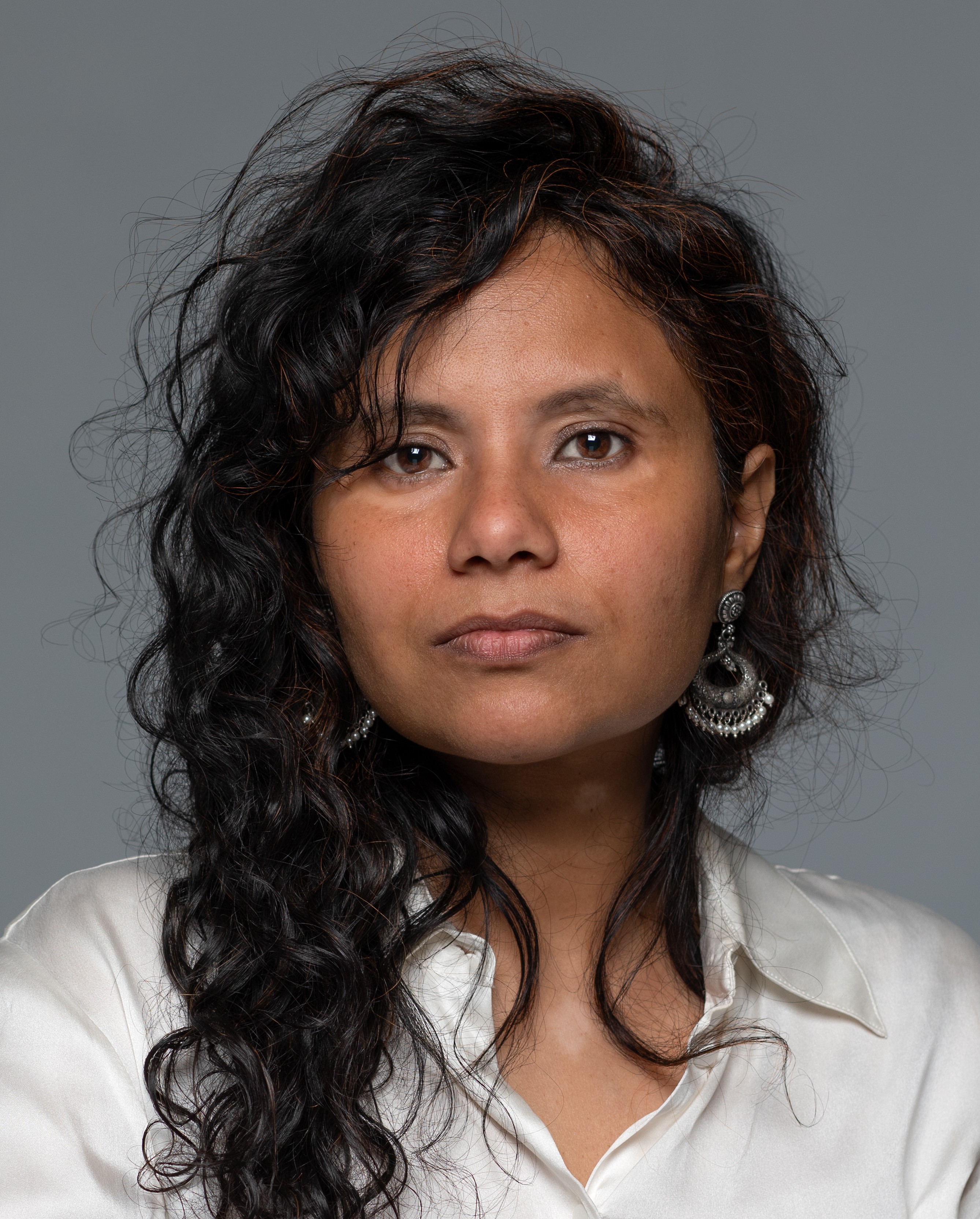
Teresa Rehman delves into author and journalist Maini Mahanta’s childhood and how it shaped her
The silence of the tiny village library was her serendipity. A shy and a quiet child, she immersed herself in books – fiction, non-fiction, mystery, romance, thriller, memoir. A small room with three wooden almirahs stacked with books was Maini Mahanta’s cocoon. She was a lonely child as she was packed off to her maternal grandparent’s home after her father was detected with bone cancer. The family was crestfallen and her overworked mother felt taking care of four children was too overwhelming. Maini remembers it as a difficult opaque time when there seemed to be no answers. However, she was anguished by this separation from her parents and her three siblings. She would often question her mother as to why she was chosen to be given away. Maini says, ‘I used to ask my mother if she took this decision because I was dusky and my siblings were fair-skinned.’ But her mother was too weighed down by responsibilities and chose to remain mute to her daughter’s wildly intuitive queries. Maini rues, ‘My mother hardly spoke but she read a lot. My brother cajoled me by saying that I was chosen to live with my grandparents by my maternal aunt. I was the chosen one!’
Maini found succour for her loneliness in the books at Rupjyoti Puthi Bharal (Library) in Madhab Gaon, a non-descript hamlet located in Jamugurihat in Assam’s Sonitpur district. Books enriched her sense of self, honed her strength and her survival instincts, and above all, brought her joy. Maini smiles, ‘I was an introvert and so basically, books were my best friends. The small library had all kinds of books, not all of them were meant for kids. But I read all of them. I enjoyed the quiet peace and the rustle of the pages turning. I developed a reading habit and unknowingly that library shaped me.’ She spent so much time in the library that people used to say that she must have memorised all the books by heart. Little did she realise that later her life would be surrounded by words and letters and that she would spearhead Nandini, the largest selling women’s magazine in Assamese.
Maini made it a habit to donate all unused books to a library every year. It’s an annual ritual for her. She says, ‘I look for a library and donate books. I want someone to read them.’ Once, when she had visited the old age home, she saw some women reading a tattered copy of Bismoi, a popular magazine in Assamese. She realised that most of these women were interested in books, so she started a library for them. Maini says, ‘Every year in December, I donate my dispensable books and try to enrich yet another library.'
The little girl was numbed by her father’s early demise. She recalls the last time when she saw her father. A month before he died, he came back from Dibrugarh after a medical checkup and stopped at Jamugurihat before heading for home at Biswanath Chariali. Maini’s eyes become moist as she says, ‘I was playing with my friends in the field. My maternal uncle called me. The Ambassador car stopped at my grandfather’s compound and my father was so weak that he could not even get down. He kept sitting and staring at me. He could not move. I saw his eyes swell with tears. He could not even wipe his own tears. I took a towel and wiped his tears. A month later, he passed away. I saw my father’s pain and decided that I would be a doctor when I grow up.’
Her new home away from home, Jamugurihat is otherwise a vibrant and culturally rich place and is situated near National Highway 52 (NH 52). The area is known for its rich agricultural produce and its annual bhaonas, a traditional performing art form in which folklore and mythological stories are enacted. The bhaonas, rituals and other performances at the village naamghar had multiple impacts on little Maini’s mind – it both entertained, educated and challenged her. The local theatres had a civilizing influence on children of her generation in today’s chaotic times. She had an idyllic childhood where she would sit with her friends and make garlands out of the Bakul flower. This dried garland is used to greet the bridegroom. She and her friends would run and reserve a snug space for themselves by leaning on the pillars of the naamghar before the bhaona started. However, they were irked when the elderly women came and chased them away from their comfortable spot.
After the bhaona is over, Maini and her friends would rush to collect bits and pieces of the shimmery costumes, crown, shiny golden lace, cheap and decorative trinkets, jewellery and beads that fell down while the play was being enacted. Maini recalls, ‘We used to perform our own bhaona in the cowshed. During the day, the cows go to graze so the cow sheds are vacant. We then stage our own bhaona with the leftover accessories, whatever we could lay our hands on. Maybe this is how I developed an interest in acting and theatre.’ She would sing borgeets and dance Bihu like the other girls of her village.
She did not meet her mother or siblings too often as transportation was scanty. Sometimes, they came to see her. ‘I used to feel bad when I used to go and drop them at the bus stand,’ she says. Her grandmother loved her but somehow, Maini felt that she had a grudge against her. 'Maybe, she felt that we were responsible for her beloved daughter’s misfortune. My grandfather worked in the tea gardens and my mother led a fairly comfortable life. My disgruntled grandmother felt that we had troubled her daughter. Deep within she felt that maybe she would not have suffered so much had it not been for us.’
Maini was often perturbed as her grandmother tried to control her and taunt her of being a girl without a father. There was once a juroon (a wedding ritual) in the village. The groom’s family was about to go. Maini was excited as many of her friends were ready to go. She was keen to join them. She went and sat in the car. But her grandmother came and dragged her out of the car. She said, ‘This girl has no father and I am responsible for her care and well-being.’ Maini rued that her grandmother stopped her from doing many things citing that she had no father. Once her grandmother told her not to pluck basil leaves as the plant might die if a girl picks the leaves. ‘I got so angry that I uprooted the entire plant. Maybe that was the time I burst out,’ she recalls. Meanwhile, her grandmother continued with her grumbling.
Growing up in a village amidst the meandering streams, green paddy fields and surrounded by cows, goats, ducks and pigeons, Maini learnt many things naturally. It was her duty to wash the dishes near the well, like most girls of her village. During winters it used to be very cold and she had the flickering light of the hurricane lamp to keep her company. While doing this deary, undemanding work, she used to look up at the hazy sky and imagine that when she would grow up, she would be someone who is very rich. ‘Someone would come, feed me and wash my hands. I would just lie down on the bed and eat to my heart’s content,’ she says.
Her only solace was her caring maternal aunt and her doting grandfather. Her grandmother did not like it when she climbed trees or rode a bicycle. But her grandfather bought her a second-hand bicycle. ‘I was one of the first few female cyclists in Jamugurihat. There was a cycle shop owner. His son had outgrown his bicycle. My grandfather was perturbed as I would often struggle to ride his huge cycle. He bought the second-hand cycle for me for Rs 150. My grandmother was furious. I used to ride the cycle to school. Girls were in awe of me. A senior called Dipali rode a boy’s cycle and people teased her as Mota (male) Dipali.’
It was basically stories that kept her spirit alive. Maini was close to her grandfather. He used to tell her stories with action and vivid expressions. ‘His eyes would glow with exhilaration as he told me stories of Ali Baba and the 40 thieves. I still remember those stories as they were told so well,’ says Maini. She would go and stay with her maternal uncle in the tea estate during her summer vacations. ‘Then the managers were Europeans. Their daughters would come and ride a horse. I would wonder at their golden hair. They looked like fairies,’ she says.
Born in 1963, she completed her class 10 from Jamuguri HS School and thereafter joined Cotton College in Guwahati for her Higher Secondary. She travelled to Guwahati city to study in Cotton College and her aunt promised to give her Rs 150 per month as pocket money. She had asked her to come with her trunk and bedding. ‘It was my father’s trunk and it had his name written on it -- G Mahanta, Gauhati University (GU). My brother used a white paint and made it M Mahanta. I asked him not to erase GU as I would also study there someday. He smirked at my ambition. It was my dream to study in Cotton College after reading the novel titled Cotton College by Nabin Barua.’
Maini lived a frugal life in Cotton College with her limited pocket money. Then the mess dues were Rs 125 and the college fee was Rs 15. She participated in inter-college contests to earn some prize money. One fine day, she decided to quit and leave. Then her friend, Lina Saikia came and stopped her. She informed Maini about a vacancy for an announcer at All India Radio where they would pay Rs 35 per day. Maini went and met the producer and apprised him of her problem. The producer was empathetic and offered her a few programmes. ‘I did a quiz and he liked it. I did it 3-5 days a month. I bore my costs. There was not much of a market in Guwahati then and we led simple lives. I got to read radio news and learnt the ABC of journalism.’
When television first started transmission, she went for the interview. Bhabendranath Saikia was on the panel and asked them to imagine a television in front of them and speak. ‘I was the best actor in Darrang College and I recited my dialogues. He corrected my diction. That was the era of black and white TV and I wanted to see how a TV looks like,’ she recalls. She was keen to see a television in real life. She went to the residence of the hostel superintendent of Kanaklata Girls Hostel in Cotton College and told her that she wanted to see the TV. The hostel superintendent was surprised and rebuked her, ‘Why on earth do you want to see the TV now? Your exams are slated for next week. Anyway, there is nothing showing on TV now.' After Maini explained, she took her to the drawing room and switched on the TV. Maini could see the bars as there were no programmes during the day. Television programmes were aired only at specific times. ‘I saw a real TV for the first time in my life,’ she explains. It was also for the first time that she had met a make-up artist and applied lipstick. ‘I was very uncomfortable as I had never applied lipstick before. During the opening announcement, I spoke without closing my lips. I was so conscious. After I came back to the make-up room, the make-up artist urged me to get used to it,’ she says.
Thereafter, she left Guwahati and did her graduation from Darrang College, Tezpur and later her masters from GU. She had also worked as a teacher at West Guwahati College and later Puthimari College but left these jobs and joined the Centre for Information and Career Development (CINCAD) as a career counsellor. She continued to work as she studied. Then she started her writing journey by writing a career column for the newspaper called Budhbar, edited by Parag Das. It was the first ever career column in Assamese. ‘Readers liked it as they found it new,’ she adds. She kept working for Doordarshan and continued writing books.
The seeds of Nandini magazine were sown in her childhood itself. Her father used to get them magazines like Soviet Desh. It was an Assamese translation from the English magazine called Soviet Land. She says, ‘In those days, Russia distributed a lot of books in India for free. My brother used to get the Bangla magazine called Suktara and my aunt got a children’s magazine edited by Nirmal Prabha Bordoloi called, Sil sil mila, bagi sil mila’. The Bangla magazine, Sananda was very popular during her college days. 'One copy used to come to our hostel and we used to fight over it and sometimes we would tear it apart,' recalls Maini. She had often thought of bringing out a similar magazine in Assamese – same paper and colour quality. She often thought that if she ever took out a magazine, it would be something like this. Inspired by her filmmaker husband Bani Das, she planned one. She assessed the costs and realised that it would be an expensive affair. She then approached the proprietor of Pratidin newspaper with a handcrafted magazine copy. ‘I got one issue ready by cutting pages and pictures by hand and then sticking it onto the pages. He readily agreed and now it’s been 25 years of Nandini,’ she gleams with pride.
Over the years, Maini admits to many moments of stasis and saturation while battling the ghosts of a troubled past. She remembers once her father, who was a government official was being transferred from a place and her mother hurriedly packed their stuff. She was clinging on to an old tattered doll which was one of her favourite toys. But her mother saw it and quickly snatched it and flung it inside the vacant house. She still remembers the doll and somehow feels that it is still there in that house they had left behind. Nurturing all of these memories with love, she might finally overcome the difficult opacity of her own growing years. She is happy with both the rural life she had once lived and the urban life she now leads. ‘I enjoy every moment. I am happy with what I have. Happiness is a decision,’ she says. Her life is grounded in ordinary transactions and simplicity. She smiles, ‘The way to my school was a cobbled street. We used to walk to the school. And it was quite far. One of our teachers went on a rickshaw. It was a big deal to go in a rickshaw in those days. The teacher painted her daughter’s name, Aimee, on the back of the rickshaw. I used to imagine if I had a rickshaw and I too, would have inscribed my name at the back of it. It was my cherished childhood fantasy!'


.jpg)






 (1).jpg)


