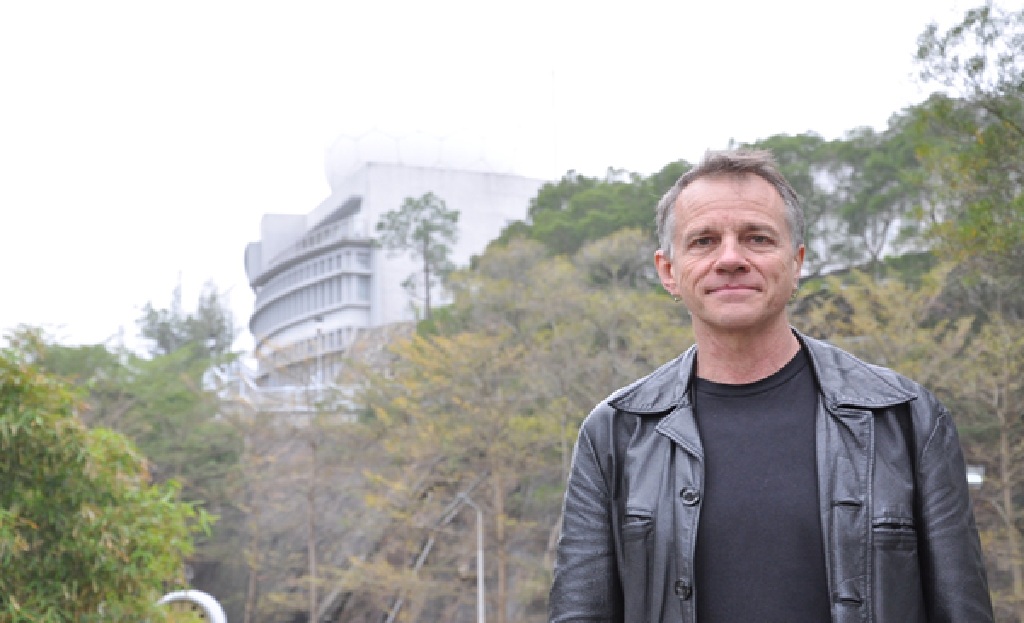
THUMBPRINTNE SERIES -- CHILDHOOD TALES
Social scientist Toby Miller tries to imagine a childhood that either moved too fast or too slow; rarely at a reasoned pace
I was born a few years after my parents indecorously departed their previous marriages and clandestinely migrated.
By the time I was five, we had lived in Britain, India, the US, and Australia. That peripatetic existence oscillated between boring suburbia (Leicester and Canberra) and exciting urbanity (Delhi, New York, London). Life was a mixture of the mundane and the glamorous: when we arrived in Australia’s capital, it had no traffic lights or television, few people, and a reactionary administration; when we returned to Britain, that meant The Beatles, the Stones, The Who, Cathy McGowan, Top of the Pops, Saeed Jaffrey, The Avengers, OO7, Joan Bakewell, Stuart Hall, Carnaby Street, and a Labour government. Shakespeare had just turned 400. Not so shabby.
My mother’s family was very poor. Leaving school at 13, never to return, at different times she was a secretary, housewife, warehouse stock-control clerk, and teachers’ aid. My father came from the lower middle class, the first in his family to attend college. He was employed in a bank (briefly), the media, and academia—a passage from the Australian Broadcasting Commission (a minor cousin to Akashvani) through worker education, universities, and The Economist.
The middle class was as new to my parents as life itself was to me. Having only recently acquired cultural capital and economic comfort, the latter always seemed precarious; they were haunted by the Great Depression. So, I had significant privilege. For example, an ayah named Kamala looked after me in India. My mother was proud of hiring Kamala, who had trouble finding employment because of tuberculosis. My parents claimed we had a special bond and that I was popular - a Delhi blond. Back in the Anglo world, I went to private, Protestant schools -- places for the parthenogenesis of the white male ruling class, laden with parents wanting to ensure their young would thrive.
My early years of schooling in London were positive; sometimes even charming. In adolescence, however, they involved cross-continental curricular confusion, teacherly abuse, isolation, and bigotry as well as solidarity and fun. The combination left me with a mistrust of boys’ schools and private education—and some profound beliefs. Among them were contradictory passions for imperialism, freedom, democracy, and socialism. I retained three of those commitments, but came to realize the horror of empire and feel ashamed of my ignorant admiration for what the British and others had wrought.
During adolescence, dreadful conflicts arose with my mother. Most spectacularly, she attacked me with a knife when I was 17. Less spectacularly, she shouted at me over dinner every night, after which my father would tell me to go to my room. A little while later, he would knock on the door and ask me to come out and apologize to her. He admitted I had done nothing wrong but he told me he was dealing with two forces of nature and just wanted peace. I complied. She would look away and say she had a headache. Once I left home and opportunities to criticize me diminished, if anything her verbal attacks worsened, culminating in saying she wanted me to die painfully from cancer and that I would be ‘a bastard of a father.’
The family’s rhetoric insisted I had been a greatly-desired baby, exemplified by my parents purchasing a recording of Antonín Dvořák’s From the New World symphony to celebrate my arrival—a new world that would joyously engulf them. Less than a decade later, my father’s polemical book The Politics of the Third World was dedicated ‘To Toby, a world in himself.’
But after mom’s death, he told me she had never wanted a child; that he had insisted; and that I had come to resemble her late brother in her mind’s eye.
Her brother and father had raped her. Little wonder she grew to hate me.
So, yes, living in those different countries, frequently venturing out from provincial dross to live in world capitals, was a privilege. Inter alia, it taught me about acclimatizing to new worlds, which has helped a lot: in the last two decades, I’ve resided in New York, Los Angeles, Mexico City, London, New Orleans, Cartagena de Indias, Madrid, and Guadalajara.
Looking back on my childhood, I’m struck by the line, variously attributed to Aristotle and the Jesuits (there’s a name for a band): ‘Give me a child until he [sic.] is seven and I will show you the man.’ It became the heartbeat of the noted documentary series [7-63] UP!, which engaged the lives of fourteen UK children-then-adults every seven years. Some died, some divorced, some migrated, some returned, some retuned, some thrived, some did not.
I was very happy at 7. We lived in what had been an impressionist artist’s skylit studio in London, I had friends whose fathers were either famous or mildly so, I loved school (my only year of girls and boys together) and even got used to British money being duodecimal: the “other” £sd.
Am I that person today? There’s no one around to give us their opinion. The sons of famous men I once knew moved on to be neither famous nor in my orbit. I am the only witness, and a potentially unreliable narrator. I think everything I just wrote is true, as I try to imagine a childhood that either moved too fast or too slow; rarely at a reasoned pace.
When I look in the mirror, I see a ghastly, ghostly image of my parents combined. That’s for sure.
They cared for me. They truly did. That might be so.



.jpg)







 (1).jpg)


